Space Force CSO Pushes 'Minimum Viable' Acquisition Model to Accelerate Capability Delivery
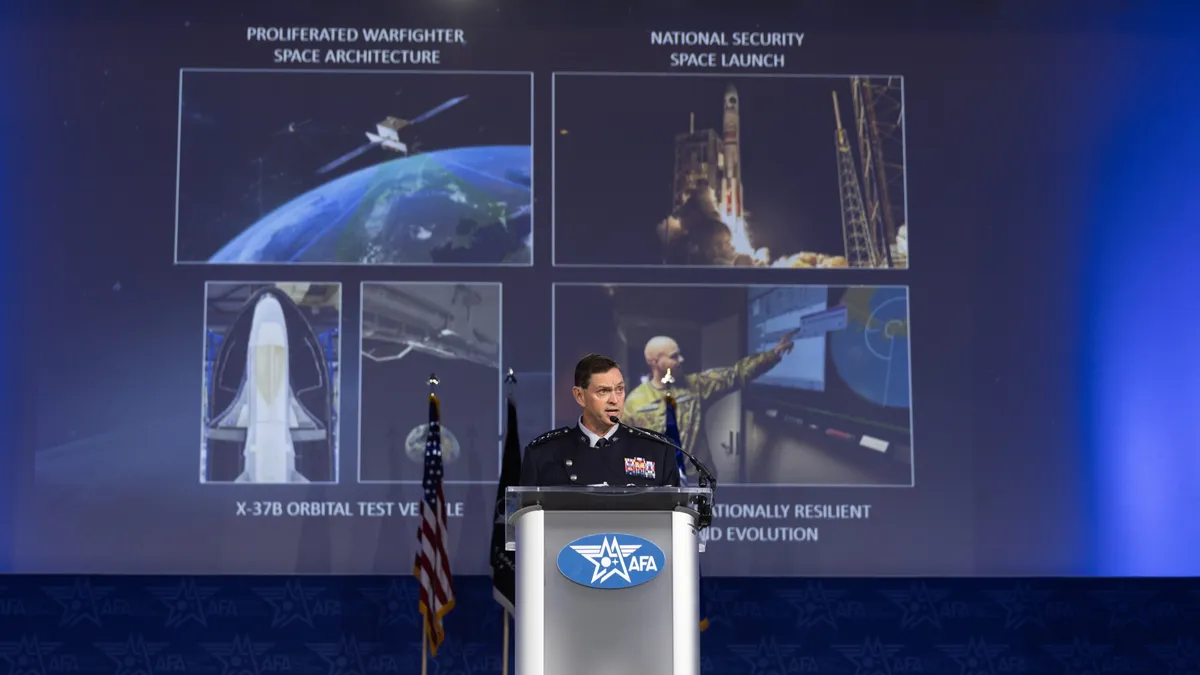
Saltzman's MVP doctrine reflects operational pressure from the three-carrier CENTCOM surge and the P-8A Poseidon IOC declaration — both signals showing the Navy and Air Force are already operating at higher tempos than space can support.
If Space Force procurement accelerates toward 18–24 month cycles, it will pull funding away from longer-development programs (Next-Generation Overhead Persistent Infrared, Advanced Space Control System) and into rapid-response contracts, reshaping which primes win and which lose margin on space modernization.
Saltzman is signaling impatience with the current acquisition timeline.
Space Force programs routinely slip 3–5 years; a CSO-level push for MVP-style delivery suggests the building believes the contested space environment is moving faster than procurement can keep pace.
This favors smaller primes and specialized contractors (Axiom, Relativity, Axiom Space) over traditional incumbents in certain segments, but it also creates execution risk — minimum viable often means fielding with known gaps, and the operational corps will have to accept degraded capability in the near term. Watch whether this translates into contract language changes in the FY27 FYDP.
Does 'minimum viable' mean accepting lower reliability thresholds, or does it mean descoping features while maintaining the same reliability bar? The difference determines whether this accelerates delivery by 6 months or 18 months — and whether it creates a sustainment liability.
Fault Lines
Strategic intelligence, synthesized daily — with a public track record. Every call graded against what actually happened.