E-3 AWACS Fleet One-Third Deployed to Iran War; E-7 Urgency Shifts from Roadmap to Immediate Requirement
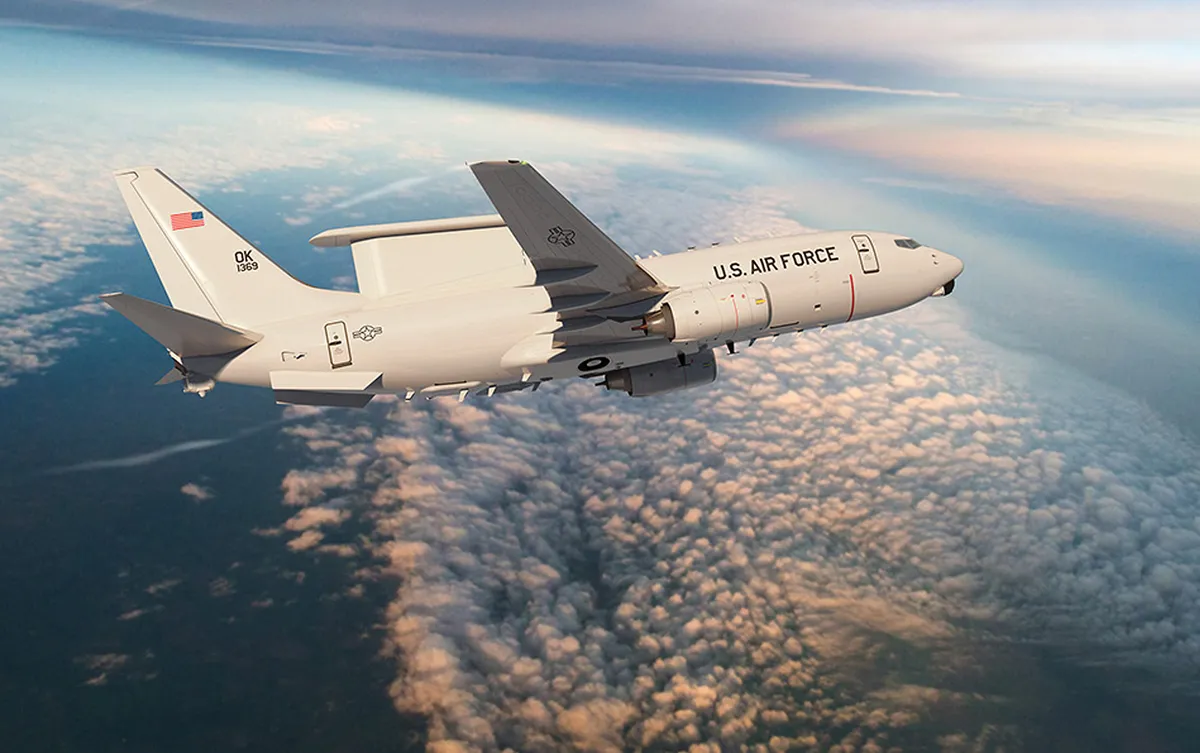
The deployment of one-third of the E-3 fleet to Iran creates a supply constraint that forces the Air Force to either accept ABM degradation in the Indo-Pacific (increasing risk to Taiwan contingency planning) or accelerate E-7 procurement and fielding.
This converts E-7 from a long-term modernization program into a near-term force-structure variable, making the aircraft's schedule and cost performance directly relevant to Pacific Command readiness posture. Boeing's ability to meet an accelerated delivery timeline will determine whether the Air Force can restore full ABM coverage across all theaters or must accept persistent gaps.
The deployment of 33%+ of the E-3 fleet to a single theater creates a capacity ceiling for airborne battle management (ABM) across all other regions (Europe, Indo-Pacific, homeland defense).
This is not a theoretical constraint — it is active. The E-7 program, which has faced schedule pressure and cost growth, now carries immediate operational relevance rather than being a future-state capability. If the Iran conflict extends beyond 60-90 days, the Air Force will face a choice: either accept degraded ABM capability in other theaters or accelerate E-7 fielding and acceptance timelines.
Neither option is cost-free. The think tank framing of E-7 as 'indispensable' is a political signal that will likely appear in Congressional testimony and FY27 budget justifications, making E-7 a protected program line. This benefits Boeing (E-7 prime) and pressures the Air Force to justify any further delays.
The article does not specify: (1) how many E-3s are deployed (one-third of how many total?), (2) the current E-7 delivery schedule and any acceleration options, (3) whether the think tank report recommends accelerating E-7 or buying additional E-3s as interim capacity, or (4) what 'indispensable' me...
Fault Lines
Strategic intelligence, synthesized daily — with a public track record. Every call graded against what actually happened.