Putin Backs Iran After Khamenei Strike, Signals Deepening Moscow-Tehran Defense Alignment
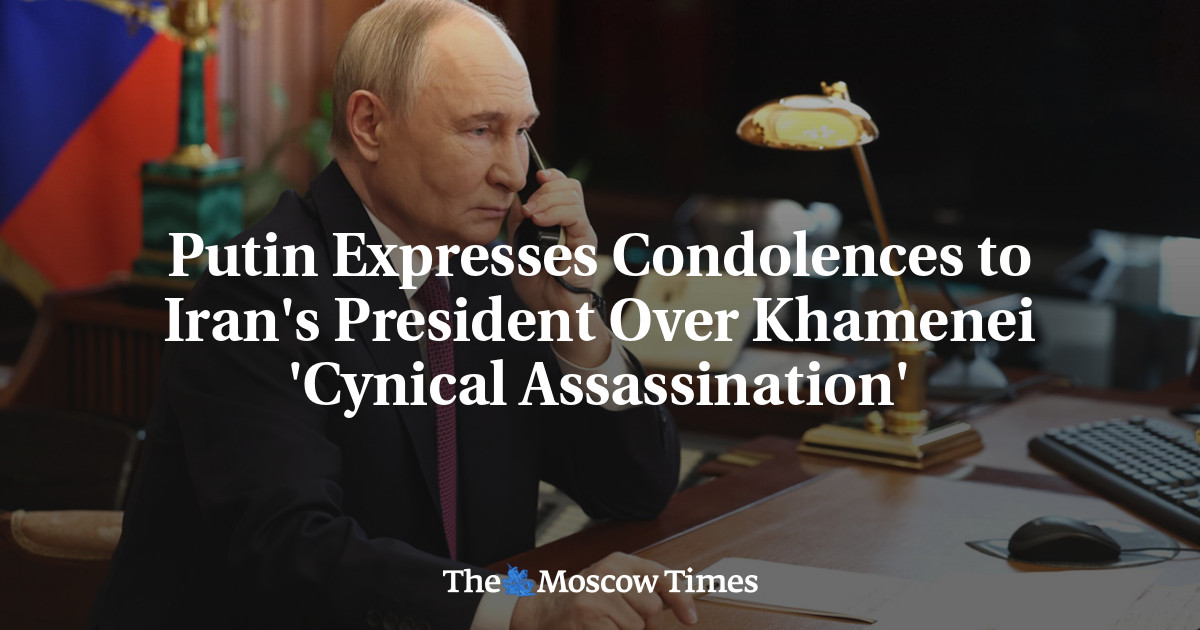
Putin's public alignment with Iran immediately after a decapitation strike creates two cascading effects: First, it signals to Gulf allies (Saudi Arabia, UAE, Egypt) that Russian neutrality is no longer available, forcing them to accelerate procurement of U.S. air defense and ISR systems to hedge against Iranian retaliation without Russian restraint.
Second, if Moscow translates rhetoric into military aid (advanced air defense, drone swarms, or cyber support), it directly multiplies Iran's power-projection capability against U.S. naval operations and Israeli targets, compressing the operational window for any follow-on strikes and raising the cost of sustained Middle East presence for U.S. carrier groups.
This confirms active U.S.-Israeli military operations against Iran's supreme leader—a threshold event that fundamentally alters regional deterrence calculations.
Putin's immediate public backing, rather than neutrality or private messaging, commits Russia rhetorically to Iran's side during its succession crisis, raising the risk that Moscow will translate verbal support into material aid (air defense systems, intelligence, drone technology) or direct military coordination.
The timing matters: Iran is vulnerable during leadership transition, and Russian support now could accelerate Tehran's procurement of advanced Russian systems or deepen joint operations in Syria and the broader region.
For defense investors: expect accelerated Russian arms transfers to Iran, potential disruption of U.S.-allied operations in the Middle East, and heightened demand for U.S. air defense and precision strike systems among Gulf allies and Israel. The critical unknown is whether this rhetorical alignment translates into operational coordination (e.g., Russian air cover, joint intelligence).
The article does not specify whether Putin offered material support (weapons, intelligence, diplomatic mediation) or merely rhetorical backing, nor does it indicate Iran's immediate military or diplomatic response.
Fault Lines
Strategic intelligence, synthesized daily — with a public track record. Every call graded against what actually happened.