Hanwha-Magnet Defense MUSV Partnership Targets US Navy Autonomous Fleet Expansion
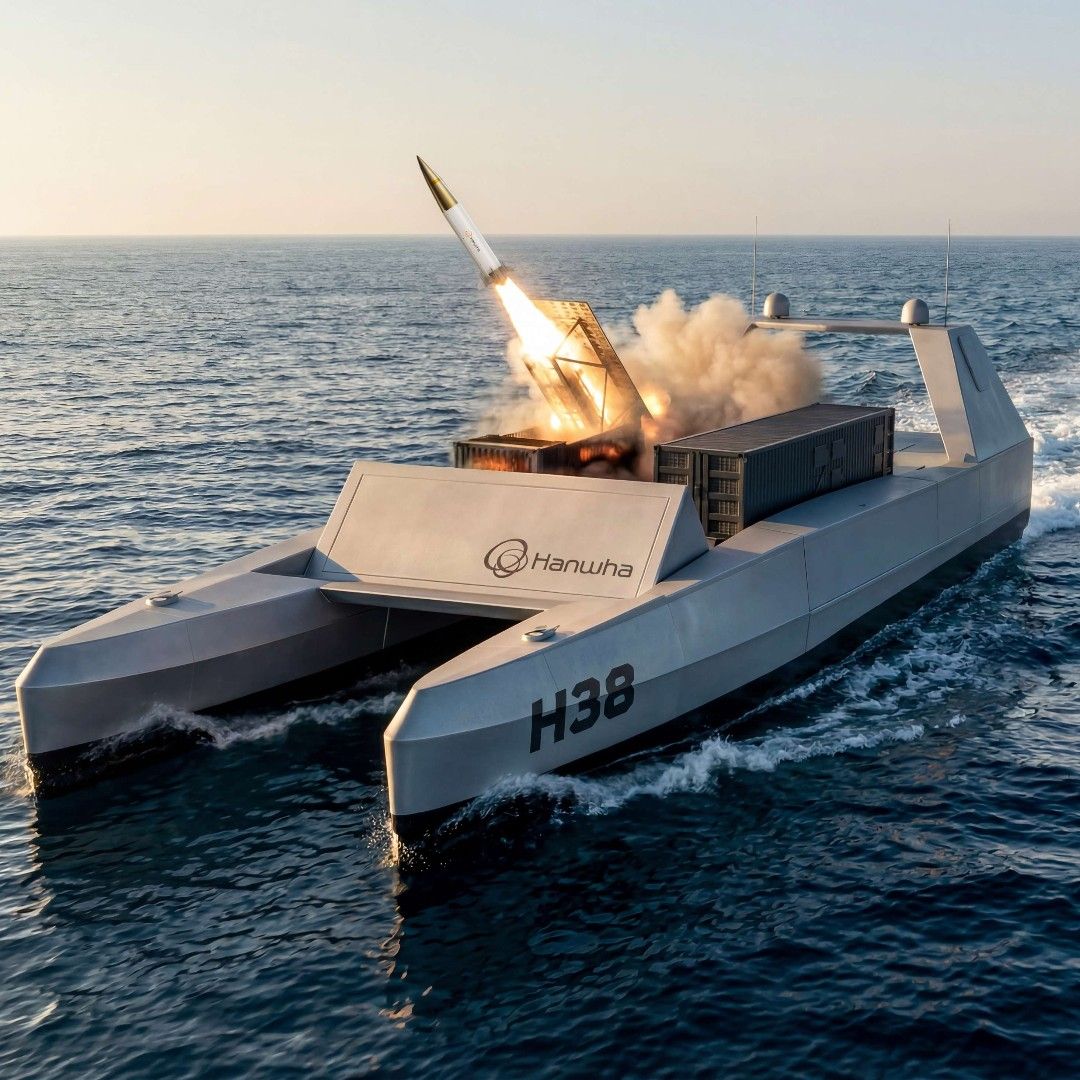
Hormuz closure (ongoing since April 18) has forced allied navies to accelerate autonomous surface platform deployment to reduce crew exposure in contested straits. South Korea's April 21 arms export policy shift and Japan's rare earth supply crisis both hinge on sustained sea control in the Indo-Pacific.
A Hanwha-led MUSV production line — if it reaches LRIP — gives the Navy a lower-cost, lower-crew-risk platform for sustained Hormuz and Taiwan Strait operations, directly offsetting attrition assumptions in Pacific Command's contingency plans.
Hanwha's Korean ownership also signals willingness to integrate allied production into US autonomous fleet architecture, a prerequisite for forward-deploying MUSVs to allied ports.
This is a straightforward industrial partnership — not a procurement award or contract signature.
Hanwha is a tier-one South Korean defense prime with proven US manufacturing footprint; Magnet is a private autonomous systems developer. The announcement signals DoD's acceptance of foreign-owned defense primes in autonomous naval production, a category that has faced scrutiny over IP and command-and-control architecture. Watch whether this partnership leads to an actual RFP or LRIP contract.
Without a named program line item or contract vehicle, this remains a capability demonstration play. The real test is whether the Navy actually funds MUSV procurement in FY27 or FY28 FYDP — if the line item exists, Hanwha-Magnet becomes a credible bidder against Textron and ASV. If it doesn't, this is a capability showcase with no near-term revenue.
Does DoD have an actual MUSV production requirement in the FY27-FY31 FYDP, or is this a vendor-led capability push ahead of formal requirements definition?
Fault Lines
Strategic intelligence, synthesized daily — with a public track record. Every call graded against what actually happened.