Army Adopts AI for Doctrine Writing While Flagging Reliability Gaps
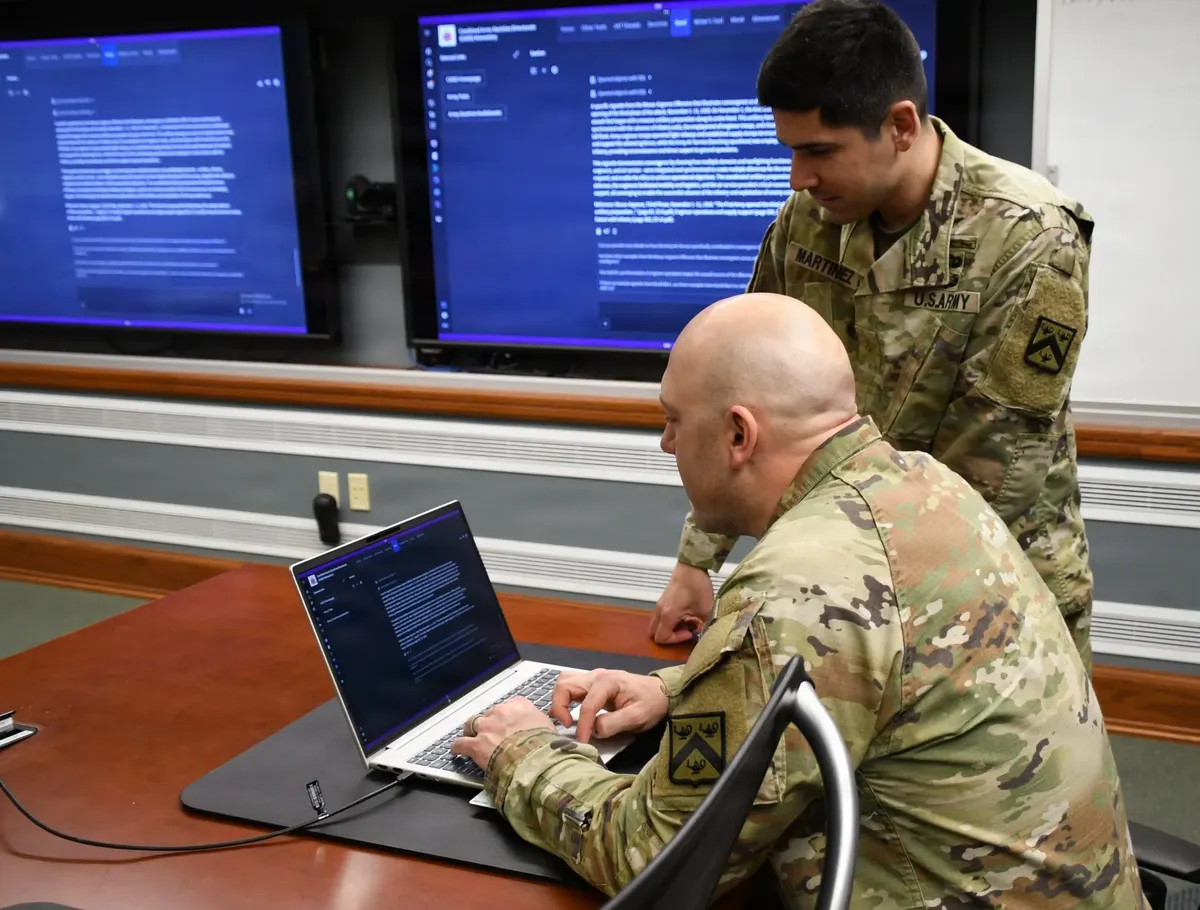
If AI-assisted doctrine accelerates the doctrine revision cycle, the Army can faster iterate force design and training protocols in response to near-peer competition (e.g., updated doctrine for multi-domain operations against China).
Conversely, if AI introduces undetected errors into doctrine—particularly in joint operations procedures or rules of engagement—it creates operational risk that surfaces only in training or actual conflict. The constraint is not the AI tool's capability but the Army's ability to staff rigorous review; inadequate resourcing of doctrine validation could convert an efficiency gain into a force-wide training liability.
This is an early-stage operational test of AI in a high-stakes knowledge domain.
Doctrine shapes how units train, organize, and fight; errors propagate across the force. The Army's framing—'resourceful junior officer, not oracle'—suggests institutional awareness of hallucination and knowledge gaps, which is prudent but also confirms the tool cannot yet operate unsupervised.
The constraint is human review bandwidth: if doctrine teams are using AI to cut corners on research and drafting, the quality floor depends entirely on the senior writer's diligence. Watch whether this accelerates doctrine production cycles (a capability gain) or merely reduces labor costs without improving output speed (a cost-shifting move).
The real risk emerges if doctrine teams treat AI output as pre-validated rather than draft material requiring fact-checking—a behavioral shift that's invisible in reporting but consequential in practice.
The article does not specify which doctrine products are being generated with AI assistance, what percentage of the Army's doctrine workload this represents, or what quality control processes are in place to catch AI errors before publication.
Fault Lines
Strategic intelligence, synthesized daily — with a public track record. Every call graded against what actually happened.