Air Force Production Bottleneck Blocks 108-Aircraft FY27 Buy; Demand Exceeds Contractor Capacity
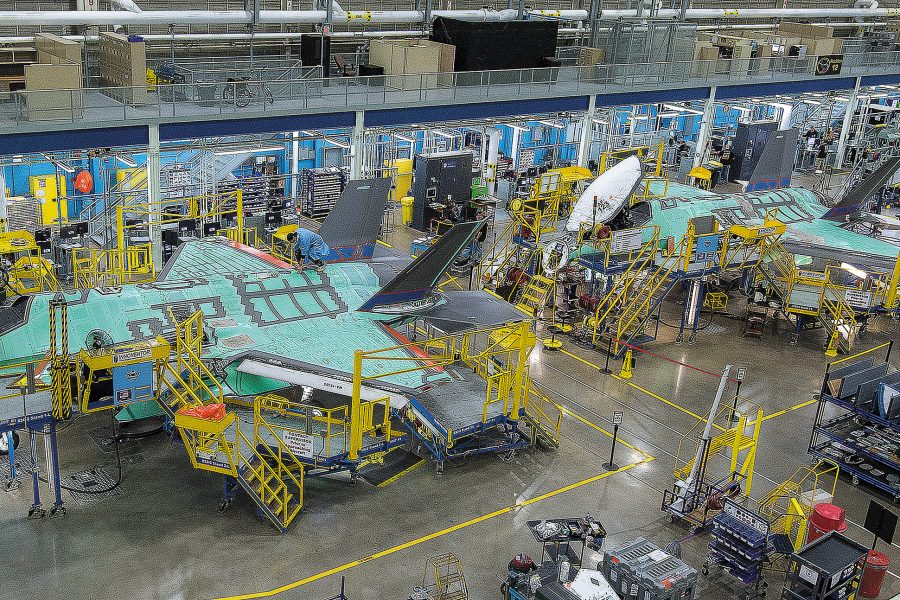
If the Air Force cannot deploy $12B+ in annual procurement authority because factories can't absorb it, two second-order effects follow. First, the services will redirect unspent authority toward munitions, sustainment, and logistics — the one area where demand is infinite and supply is also constrained.
Second, Lockheed and Boeing will face pressure to justify high labor costs and fixed overhead on lines that cannot scale, which invites activist investors to demand margin expansion through workforce reduction or facility consolidation. That collision is where the next industrial-base crisis lives.
This is a supply-side constraint that inverts the normal procurement problem: Congress has money, the Air Force has requirements, but Lockheed Martin, Boeing, and Northrop Grumman cannot deliver airframes fast enough to absorb it.
The binding lever shifts from the budget cycle to the factory floor. If production rates don't accelerate, the Air Force will carry forward unobligated FY27 procurement authority into FY28, compressing the window for new starts and forcing LRIP decisions on multiple programs (F-35, KC-46, B-21) into a narrower timeline.
Watch the FY27 NDAA markup for language tying production acceleration incentives to contract modifications — if Congress doesn't embed penalty clauses or milestone bonuses, the primes have zero urgency to break their current cadence.
What is the actual bottleneck — is it airframe assembly (Lockheed's Fort Worth line, Boeing's St. Louis), engine production (P&W, GE), or subsystem integration? Lamontagne didn't specify. The answer determines whether the constraint is months or years to resolve.
Fault Lines
Strategic intelligence, synthesized daily — with a public track record. Every call graded against what actually happened.