Intel 18A Xeon 6+ launch tests foundry viability against TSMC in AI data center race
Intel's 18A success or failure directly determines the cost and lead time for U.S. government AI workload acceleration in classified and unclassified environments.
If 18A achieves parity with TSMC N3 at scale, DoD and intelligence agencies can source advanced CPUs domestically, reducing supply-chain risk and export-control exposure; if 18A lags, they remain dependent on TSMC or forced into custom-silicon design cycles that extend procurement timelines.
This outcome also affects the viability of Intel's foundry bid to produce advanced logic for defense contractors (Lockheed, RTX, Northrop) — a stated DoD priority under CHIPS Act funding.
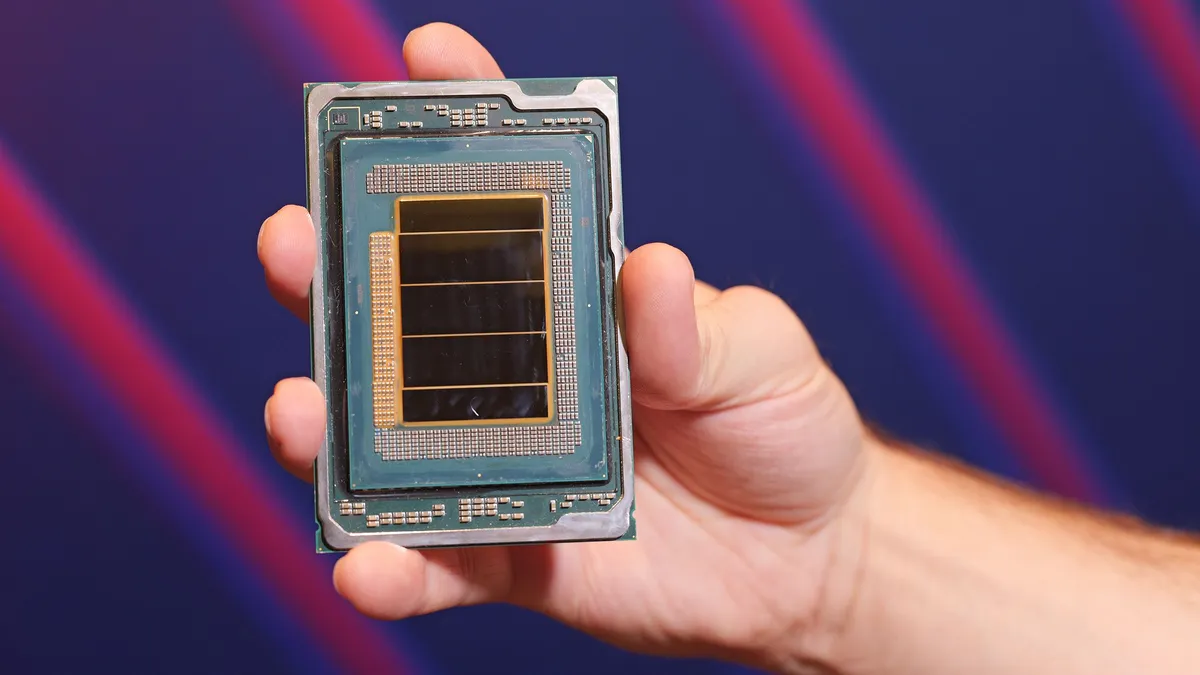
Intel's 18A debut in Xeon is a viability test for its foundry strategy and internal competitive position.
If 18A achieves stated density and power targets at scale, it unblocks Intel's ability to win back hyperscaler CPU business and license the process to external foundry customers — both essential to recouping billions in fab capex.
Conversely, if yields remain constrained, ramp is slow, or performance lags TSMC N3-equivalent nodes, Intel's foundry ambitions face existential pressure, and hyperscalers accelerate custom silicon (Trainium, Graviton) and AMD adoption. The outcome determines whether Intel remains a credible alternative to TSMC for advanced logic in the next 18–24 months.
Investors should track actual customer orders, yield data, and competitive benchmarks — the announcement alone does not confirm commercial traction.
The article does not disclose: (1) which hyperscalers (AWS, Google, Microsoft, Meta) have committed to 18A Xeon purchases or timelines; (2) actual production volume or ramp schedule; (3) die yield or cost per unit versus 7nm/N3 equivalents; (4) performance per watt versus AMD EPYC 9005 and custom si...
Fault Lines
Strategic intelligence, synthesized daily — with a public track record. Every call graded against what actually happened.