Navy Clears MQ-25A Stingray for Serial Production; Carrier Air Wing Refueling Enters Manufacturing Phase
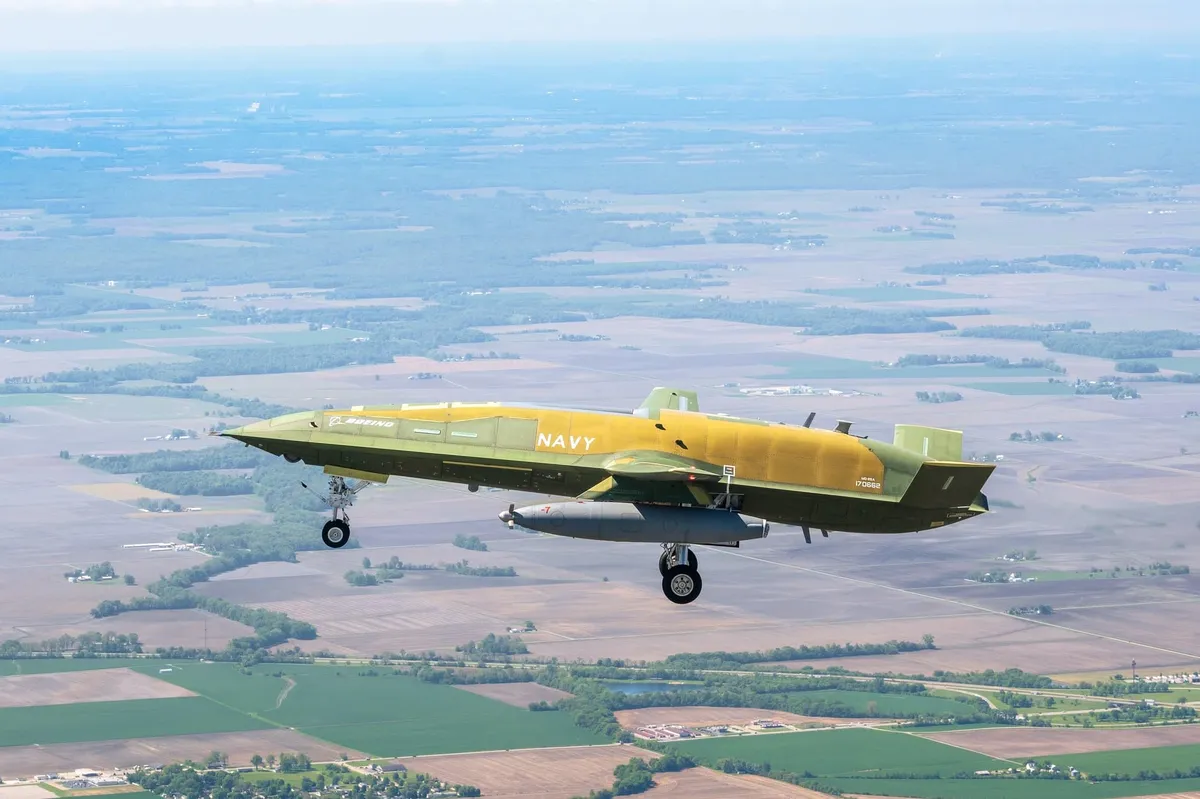
If Stingray ramps to 20+ units annually by 2028, it absorbs roughly 2-3 deck spots per carrier that would otherwise house manned strikers or EW platforms. That forces a redesign of the air wing's strike-to-support ratio. Concurrently, the Navy is under pressure to increase the F/A-XX production rate to replace aging Hornets — a competing claim on shipyard and supply-chain capacity.
The Stingray's success depends on proving autonomous refueling cuts average mission duration by 25%+ to justify the trade-off in firepower. If it doesn't, the program becomes a sunk-cost anchor.
This unblocks sustained carrier air wing endurance on a 10+ year timeline, but it exposes a hard constraint: no unmanned air-to-air refueling system exists in the fleet yet, and the Stingray's production ramp directly competes with manned aircraft procurement for deck space and maintenance crew allocation.
The Stingray enters the carrier at a moment when F/A-18 Super Hornet fatigue life is compressing and EA-18G Growler fleet hours are climbing — meaning the Navy is banking on autonomous refueling to extend sortie depth without adding hulls or air group size.
Watch whether NAVAIR's FY27 budget justifies concurrent procurement of both Stingray and the next-generation manned strike fighter, or whether the Stingray becomes the fiscal pressure relief valve that delays F/A-XX.
What is the actual production rate in Lot 1 — units per year and total contract value? The article does not state a procurement quantity or timeline to IOC.
Fault Lines
Strategic intelligence, synthesized daily — with a public track record. Every call graded against what actually happened.