Ukraine, Germany Launch Joint Air Defense Development; Expands Cooperation on TerMIT Robotic Systems
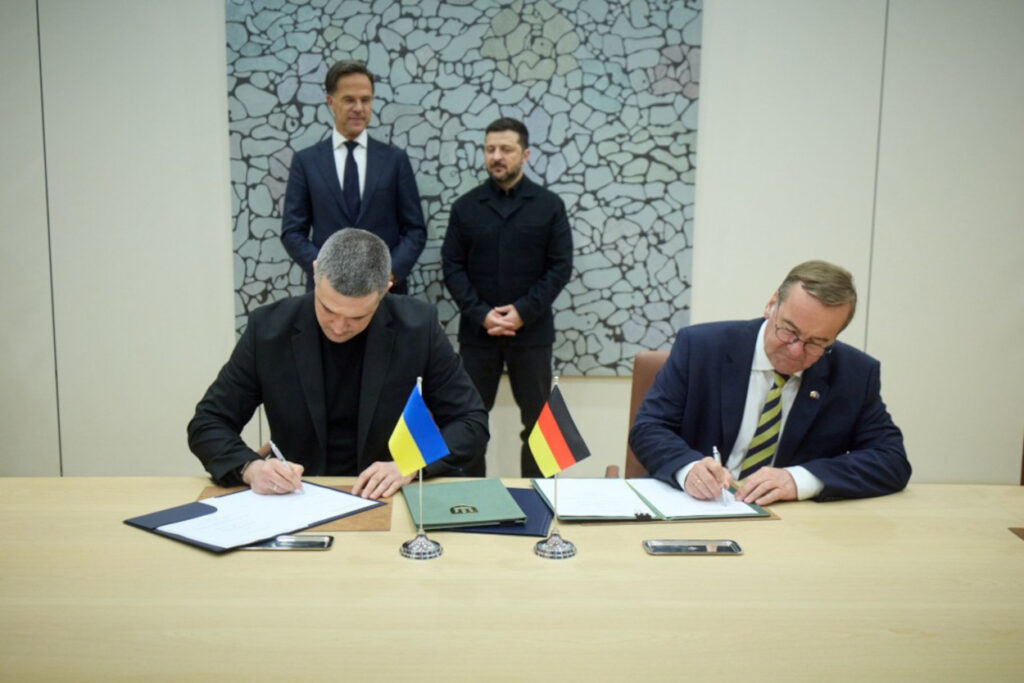
Co-development creates a feedback loop: German engineers embedded in Ukrainian weapons programs become intelligence targets, which forces Germany to harden its own defense-industrial security posture—draining resources from NATO interoperability initiatives.
If the TerMIT system reaches production scale (estimated 500-1,000 units annually based on comparable programs), Germany's additive manufacturing and robotics supply chain faces new export control scrutiny from the US Commerce Department, which has already flagged dual-use robotics as a control vector.
Germany is now co-developing rather than merely supplying air defense—a shift that locks Berlin into Ukraine's procurement timeline and exposes German industry to Russian targeting calculus.
The TerMIT production commitment signals Germany views Ukraine's ground campaign as a multi-year requirement, not a transitional aid posture. Watch the Bundestag defense committee hearing on June 25 for the budget allocation and whether this triggers a formal amendment to the Germany-Ukraine defense protocol.
Does the joint development agreement include German production facilities on German soil, or is manufacturing outsourced to Poland or a third party? That determines whether German industrial capacity becomes directly vulnerable to Russian strike planning.
Fault Lines
Strategic intelligence, synthesized daily — with a public track record. Every call graded against what actually happened.