Russia Supplies Iran Targeting Data on US Warships, Aircraft in Active Conflict
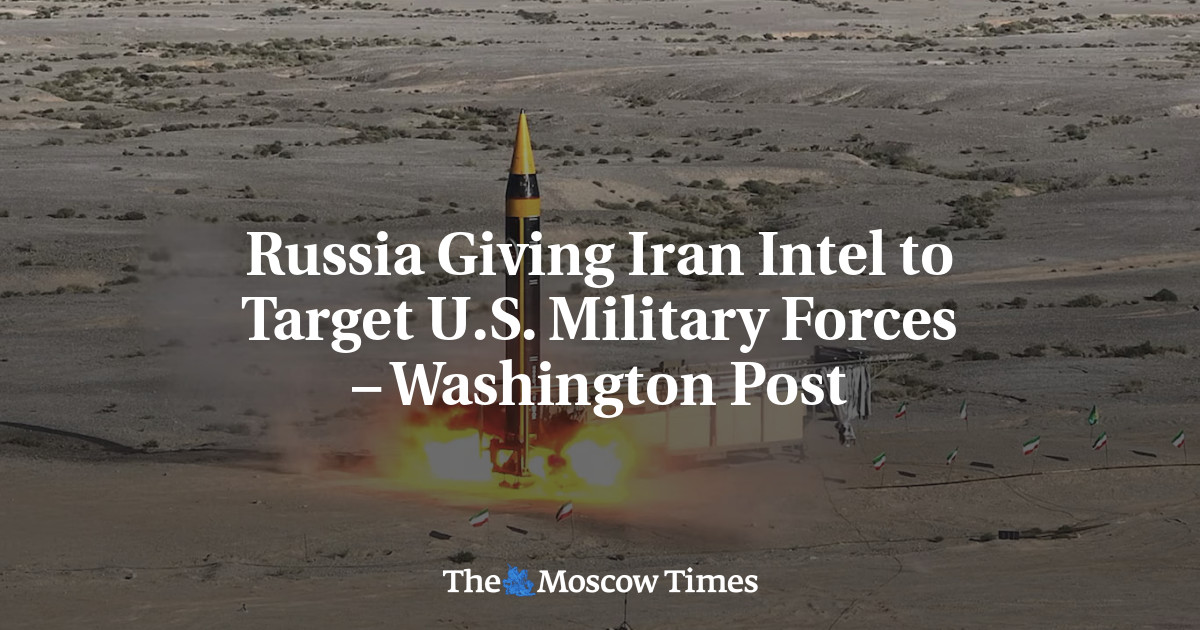
Russian targeting support converts Iran's strike accuracy from ballistic-only to network-enabled, forcing US Navy to operate under the assumption that surface ship positions are compromised.
This directly increases the operational cost of sustaining air operations from Gulf bases — if Russia is cueing Iranian missiles to US carrier strike group coordinates or Al Udeid/Al Dhafra positions, air defense magazines deplete faster and sortie generation rates decline.
If confirmed, Russian targeting intelligence materially extends Iran's strike range and accuracy against dispersed US naval and air assets across the Gulf and Indian Ocean.
This directly affects force protection calculations for Central Command — air defense planning, ship positioning, and sortie timing must now assume Iranian missiles receive external cueing, not just inertial/pre-programmed targeting.
The strategic consequence: Russia converts passive diplomatic support into active kinetic advantage for Iran, raising the cost of sustained US operations and potentially forcing redeployment of vulnerable surface combatants. However, the claim rests on unnamed officials; without attribution to a primary government statement or corroborating reporting, confidence remains moderate pending official confirmation.
The article does not specify: (1) what specific targeting data Russia is providing (real-time coordinates, ship movement vectors, air tasking order timing); (2) how recently this sharing began (before March 3 strikes or after); (3) whether this intelligence has demonstrably improved Iranian strike s...
Fault Lines
Strategic intelligence, synthesized daily — with a public track record. Every call graded against what actually happened.