16 Air Assault Brigade Demos AI Recce-Strike; NATO Interop Testing Accelerates
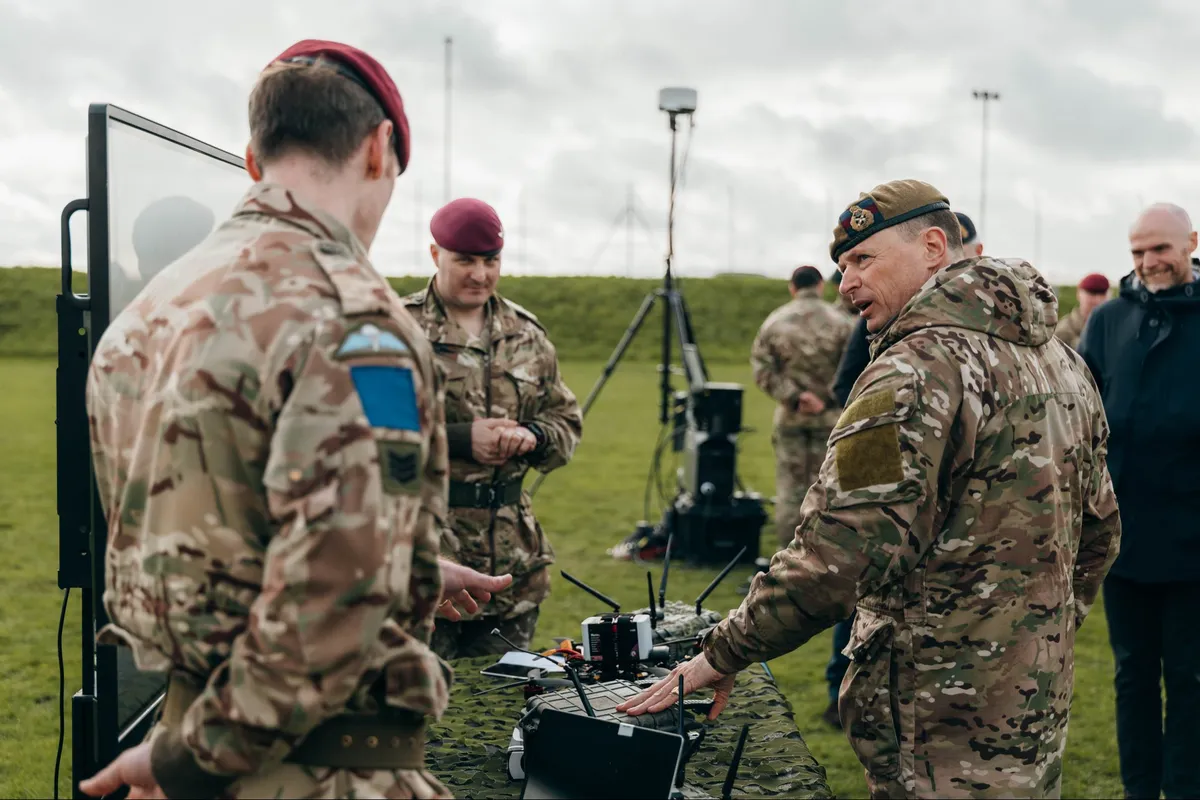
If 16 Air Assault's AI-enabled strike package becomes doctrine, UK procurement must lock in compatible sensor suites and comms bandwidth before NATO contingency planning windows close—likely forcing acceleration of the Future Soldier Load (FSL) programme and potential early retirement of legacy battalion-level C2 systems.
This creates a window for suppliers of edge-compute platforms and AI-hardened radio systems (e.g., Thales, Leonardo, BAE Systems) to bid into follow-on contracts, but only if integration testing with allied forces completes on schedule.
This confirms 16 Air Assault is operationalizing AI-assisted targeting and decision-support at the brigade level—a meaningful step beyond lab trials.
For NATO interoperability, the timing matters: if UK air assault doctrine now depends on AI-enabled sensor-to-shooter loops, allied air forces and ground units must validate data-sharing protocols and latency tolerances before contingency operations.
The demonstration to CGS signals internal validation occurred, but does not indicate whether NATO partners (particularly France, Germany, Poland) have tested integration with their own systems. Procurement implications are unclear—the signal tracks capability fielding, not equipment orders or vendor selection.
The article does not specify: (1) which AI systems were demonstrated (organic to 16 AA or borrowed from a contractor); (2) whether the capability is already operationally deployed or remains experimental; (3) which NATO allies, if any, have been briefed or tested interoperability; (4) whether this d...
Fault Lines
Strategic intelligence, synthesized daily — with a public track record. Every call graded against what actually happened.