TSMC's $20B Arizona Expansion Hits Labor and Water Walls; Visa Constraints Threaten Scaling
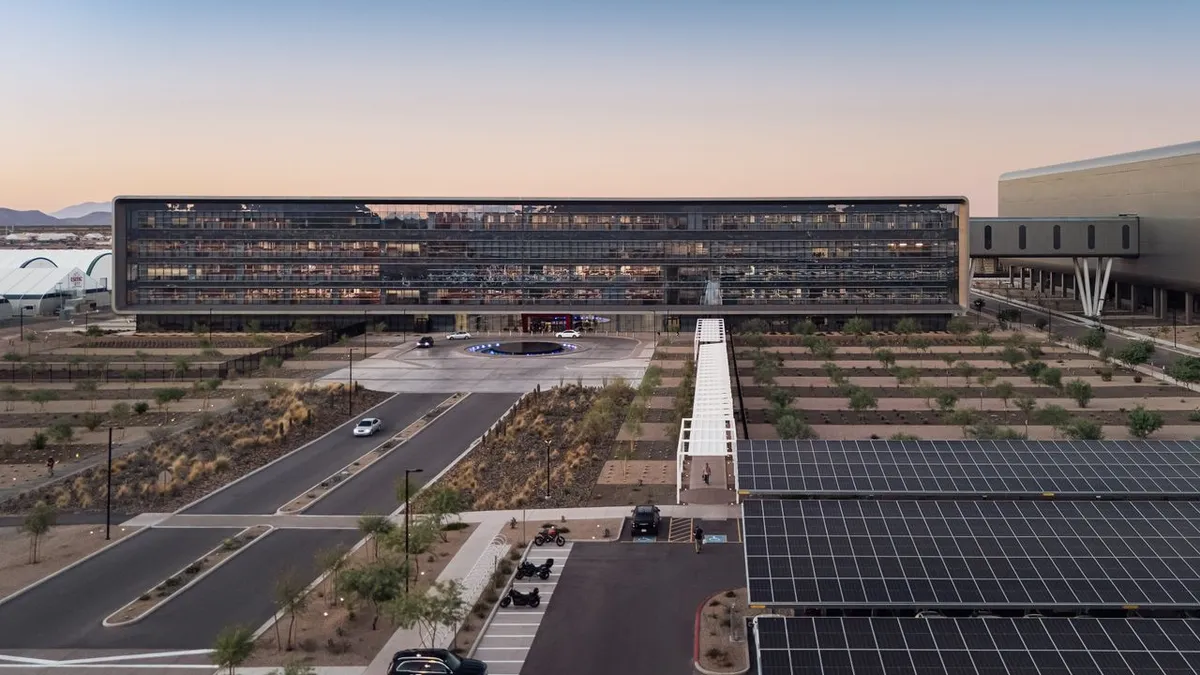
If labor and water become binding constraints, the second-order effect cascades into the Navy's shipbuilding timeline and CHIPS Act ROI. Fab 21's profitability in Year 1 is real and unusual — but it's based on current production volumes and Arizona's current water allocation. A 50% expansion requires 50% more water in a state already litigating Colorado River shares with California and Nevada.
Meanwhile, the Navy's $65.8B plan locks Newport News and Bath Iron Works into a 30-year cadence that depends on domestic chip supply for fire control systems, radar, and combat management systems. If TSMC cannot hire fast enough, those yards face supply-side delays that no amount of appropriations will fix.
TSMC's ability to scale U.S. production directly determines whether the Biden-Harris and Trump administrations can credibly reduce dependence on Taiwan for advanced nodes below 3nm.
The $20B commitment signals confidence in the market, but the three named constraints — labor, water, visa policy — are not TSMC problems. They are U.S. policy problems that will force the Commerce Department, DHS, and Arizona water authorities to choose between competing priorities.
If visa rules remain unchanged, TSMC cannot staff the fabs at the pace the $65.8B Navy Shipbuilding Plan (released May 11) and broader CHIPS Act logic require. If water allocation shifts away from manufacturing, the fabs go cold. These are hard stops, not headwinds. Watch whether TSMC formally requests visa waivers or H-1B exemptions in the next two quarters — that's the signal that labor is the binding constraint.
What is the actual labor attrition rate at Fab 21, and how does it compare to TSMC's Taiwan baseline? The article says TSMC 'continues to struggle' but provides no numbers.
Fault Lines
Strategic intelligence, synthesized daily — with a public track record. Every call graded against what actually happened.