India Tests TARA Glide Bomb; First Low-Cost Standoff Munition Clears Flight Validation
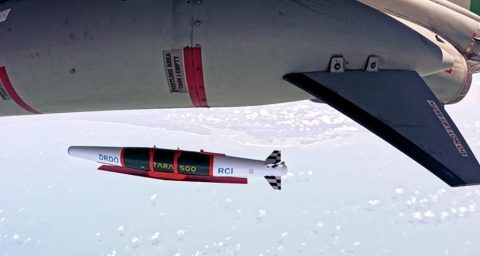
If TARA reaches operational status by 2027-2028, it reorders the Indo-Pacific munitions market at a critical moment. Vietnam's BrahMos purchase ($700M) signals appetite for non-US systems; a $5-8M TARA glide bomb would undercut Paveway pricing and give India a defense export that doesn't trigger US ITAR reviews or Chinese retaliation.
The second-order effect: India's defense industrial base moves from licensed production and imports toward organic capability, which strengthens its leverage in AUKUS and Quad negotiations — it becomes a supplier, not just a buyer. This matters for Lockheed Martin and RTX's munitions export strategy in South Asia, where they've relied on India's foreign military sales dependency.
India is closing a gap in its air-to-surface arsenal that has forced reliance on imported systems — and doing it domestically reduces dependence on foreign suppliers at a moment when supply chains to India are under pressure from China's blocking rules and US export controls.
DRDO's success on first test suggests the system moves toward production within 18-24 months, which means Indian Air Force procurement can shift from Raytheon Paveway variants to indigenous munitions by 2028.
This also signals to Vietnam, Philippines, and other Quad-adjacent partners that India can supply affordable standoff weapons — directly relevant given Vietnam's $700M BrahMos negotiations and the 15-nation queue for advanced munitions. Watch for DRDO production timelines and whether HAL or Bharat Electronics receives the manufacturing contract.
What is TARA's estimated range, guidance accuracy (CEP), and unit cost compared to Paveway IV? The article provides none of these — essential for assessing whether this genuinely displaces imports or remains a niche capability.
Fault Lines
Strategic intelligence, synthesized daily — with a public track record. Every call graded against what actually happened.