China Routes Drones to Russia Through Thailand, Bypassing Direct Export Controls
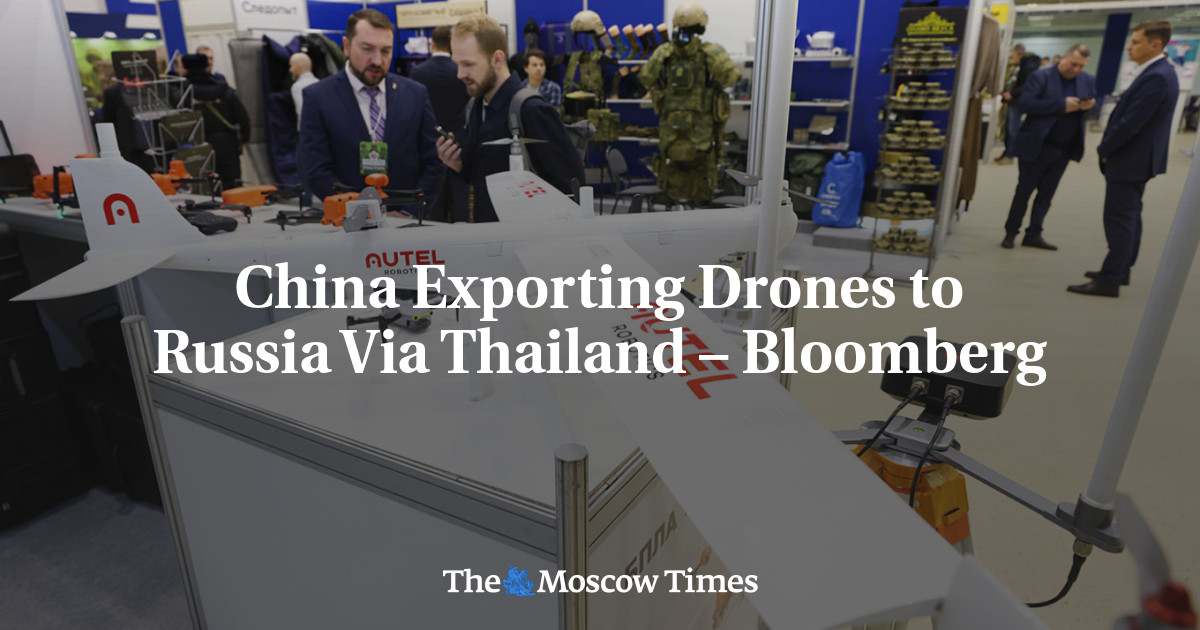
Operationalized transshipment routes compress the cost of Russian drone attrition, extending Russia's ability to sustain current operational tempo in Ukraine without exhausting domestic production or stockpiles.
This directly feeds into Power Projection calculations: if China can supply drones at scale via third-country routing, Russian air-to-ground and reconnaissance capability regeneration rates shift upward, forcing NATO air defense procurement timelines and Ukrainian force replacement rates to accelerate to offset the supply advantage.
This reveals a working transshipment route for Chinese military-grade unmanned systems to Russia, suggesting sanctions evasion is operationalizing faster than Western detection and enforcement cycles.
Thailand's sudden emergence as a drone exporter (from negligible baseline) indicates either Chinese production relabeling or a deliberate proxy arrangement.
The $125M figure represents a material resupply vector for Russian attrition losses in Ukraine — if sustained, it forces U.S. and allied export control agencies to either pressure Thailand's government (risking strategic realignment toward Beijing) or accept that bilateral sanctions on China-Russia defense trade are leaking.
The mechanism matters: if this is Chinese factories shipping via Thai customs, it's a compliance problem; if it's Chinese drones assembled or repackaged in Thailand, it's a sanctions architecture problem that extends to any third country with minimal drone manufacturing capacity.
The article does not specify whether these are Chinese-manufactured drones transshipped unchanged through Thailand, or whether any assembly, integration, or modification occurs in Thailand that could create a legal distinction under export control law.
Fault Lines
Strategic intelligence, synthesized daily — with a public track record. Every call graded against what actually happened.