German Firm Unveils Pulse P19 Counter-Shahed Aircraft With Four Weapon Categories
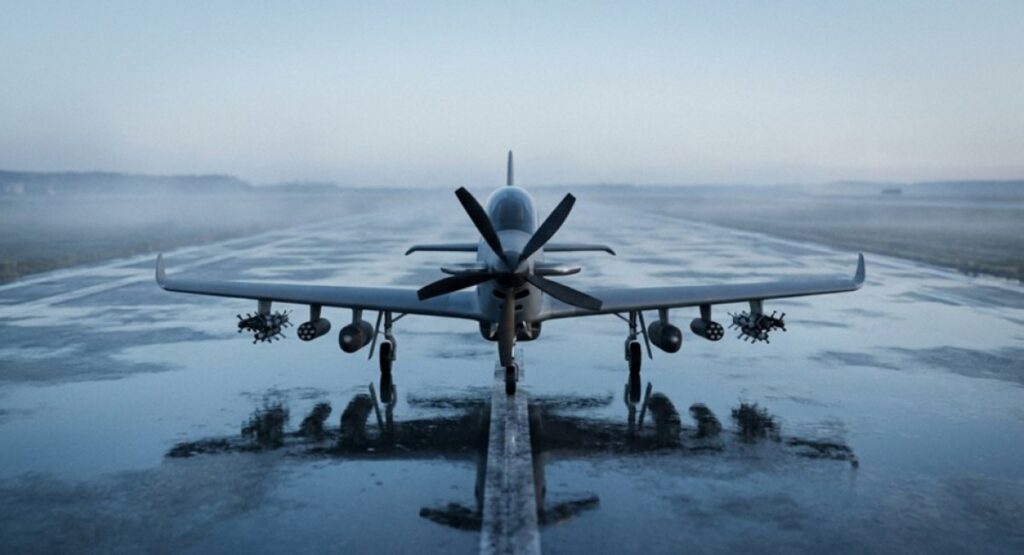
If the P19 enters service, it creates a cost asymmetry that favors Ukraine: each Shahed costs Russia ~$20K; a P19 sortie costs Ukraine a fraction of that if it achieves 2-3 kills per mission. The second-order effect: Russia would respond by increasing Shahed production or switching to lower-cost saturation tactics (cluster munitions on cruise missiles, which they're already doing per June 10 reporting).
This forces Ukraine into a production race it cannot win — the real constraint is not air defense design, but manufacturing capacity and foreign currency to sustain it. The P19 is tactically sound but does not solve the strategic problem of Russian numerical superiority in strike platforms.
Ukraine's air defense architecture is hemorrhaging capacity against Shahed swarms — Russia has shifted Kalibr missiles to cluster warheads (per June 10 reporting) and continues saturation attacks.
A domestic or allied production alternative to point-defense systems (Gepard, HAWK, Patriot) that can be fielded faster and at scale changes the calculus for air-denial operations.
The mechanism: if the P19 enters production within 12 months and achieves even 30% attrition rates against Shahed formations, it absorbs strike volume that would otherwise require NATO air defense systems to cycle through ammunition reserves faster than FYDP replenishment timelines allow.
Watch whether Ukraine's General Staff formally requests procurement and production licensing — that signals confidence in the design and willingness to divert scarce foreign currency.
What is the actual production timeline and unit cost? Does the German firm have manufacturing capacity in Ukraine or allied territory, or would production depend on German industrial base? The article provides renders but no performance data — has Ukraine tested a prototype?
Fault Lines
Strategic intelligence, synthesized daily — with a public track record. Every call graded against what actually happened.