Air Force Special Ops Accelerates Backpack FPV Drone Procurement Amid Active Iran Conflict
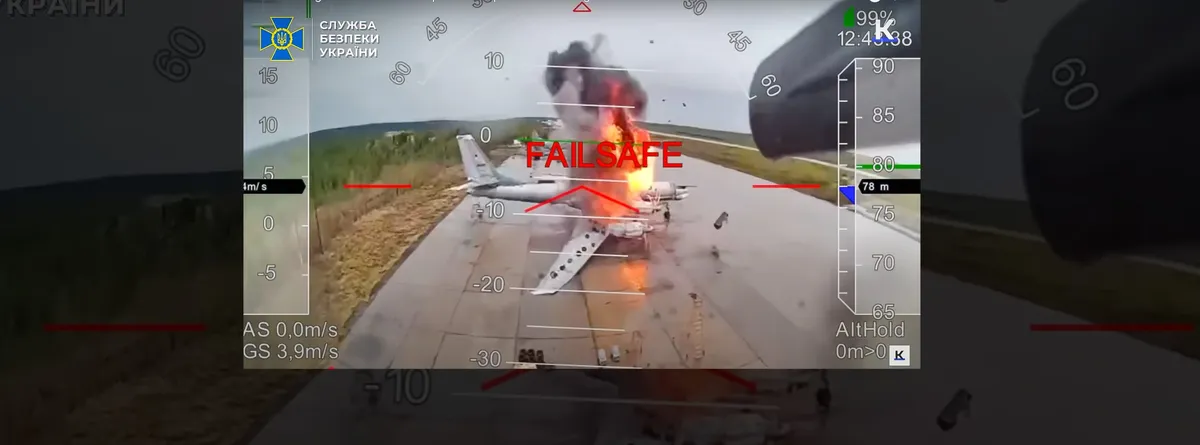
Active Iranian retaliation and US-Israeli decapitation strikes (March 17-19) have created immediate demand signals for low-signature, operator-portable precision strike — the exact capability Ukraine deployed successfully against Russian armor and logistics.
If Air Force accelerates FPV procurement, it compresses the timeline for small-UAS suppliers to scale production, which will compete for semiconductor and battery supply chains already stressed by broader defense industrial demand.
This procurement signal arrives during active US-Israeli strikes on Iran (March 14-19, 2026) and reflects a doctrinal shift toward distributed, low-cost precision strike at squad level.
If the Air Force accelerates FPV acquisition timelines, it signals expectation of sustained distributed operations in contested environments — a capability gap exposed by Ukraine's asymmetric success.
The immediate relevance is to small-UAS contractors (AeroVironment, Skydio, FLIR) and special operations budget cycles, but the timing suggests this is not theoretical — it's a response to demonstrated effectiveness in an active conflict. The constraint is manufacturing scale: FPV drones are labor-intensive and require rapid iteration, which will test US industrial base capacity if demand accelerates.
The article does not specify: (1) whether this is a new requirement or acceleration of an existing one; (2) target production volume or unit cost; (3) timeline to initial fielding; (4) whether this is SOCOM-led or service-specific; (5) which contractors are being evaluated or have prototypes.
Fault Lines
Strategic intelligence, synthesized daily — with a public track record. Every call graded against what actually happened.