F-35A Takes Ground Fire Over Iran; Damage Assessment Pending
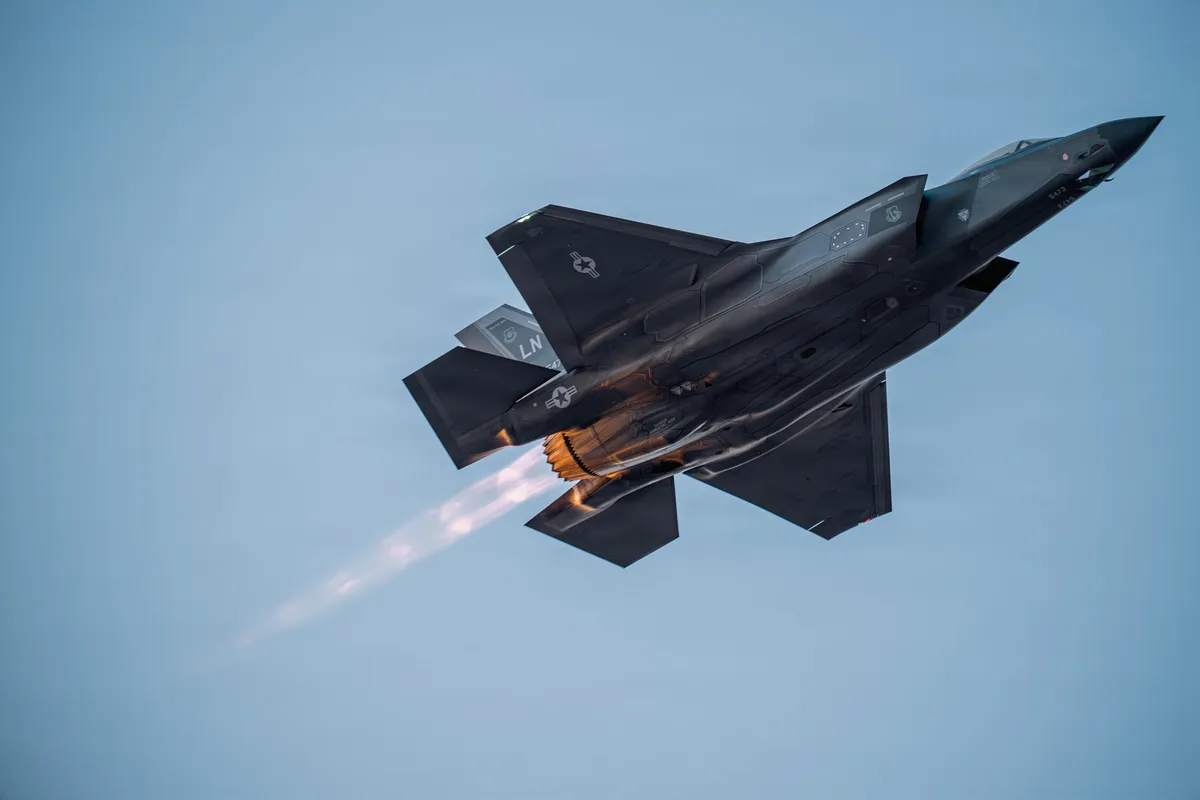
If Iranian air defenses remain capable of damaging fifth-generation platforms despite U.S. strikes on Hormuz missile sites, this directly constrains the air campaign's tempo and geography.
Planners will likely shift to higher-altitude or standoff strike profiles (cruise missiles, stand-in jamming), reducing sortie rates and extending campaign duration — directly contradicting Hegseth's March 19 statement that strikes will continue at Trump's discretion without time limit.
Sustained attrition of F-35A availability also affects allied interoperability: Israel, Japan, and South Korea all depend on F-35 supply chain and sustainment; extended U.S. operational demands compress availability for partner nations.
This is the first reported loss of U.S. air superiority platform to Iranian air defense during the active campaign.
If the airframe is damaged beyond rapid repair, it signals Iranian air defenses remain effective despite sustained U.S. strikes on Hormuz-area missile sites (March 18). This matters for force planning: Pacific Command and Central Command will need to reassess F-35A operational tempo, sortie rates, and platform survivability assumptions in contested Iranian airspace.
The incident also provides Iran with a tactical win in messaging after three days of leadership decapitations and energy infrastructure targeting.
The article does not specify: damage severity or repairability; whether the aircraft was struck by missile, AAA, or MANPADS; which Iranian air defense system inflicted the hit; the mission objective; or whether this represents a single anomaly or a pattern requiring operational pause.
Fault Lines
Strategic intelligence, synthesized daily — with a public track record. Every call graded against what actually happened.