Navy Awards $99.7M to Domino Data Lab for Real-Time Mine Detection AI in Hormuz
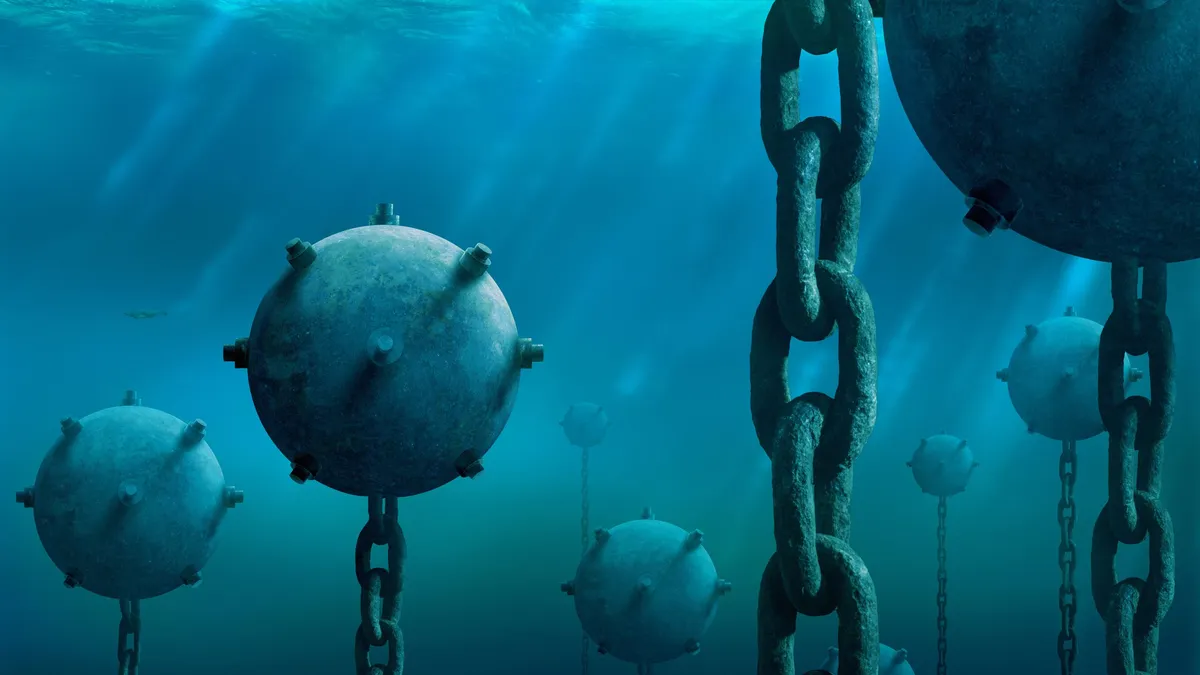
The Hormuz blockade (90% shipping collapse, 20,000 trapped sailors) has created a sustained demand for minesweeping — a task the Navy cannot execute at scale without AI acceleration. This contract directly extends the operational tempo of the blockade by removing the AI retraining delay that would otherwise force the Navy to rotate sweepers offline for algorithm updates.
Simultaneously, the contract ties Navy operations to a commercial AI firm's availability and security posture, creating a new single point of failure in the blockade's execution.
This is a direct response to the operational bottleneck created by the Hormuz blockade — the Navy is buying speed in AI retraining to keep drone minesweepers operational in a contested environment where Iranian mine-laying is a live threat.
The contract reveals two hard constraints: (1) current mine detection systems are failing fast enough in the field to justify $100M in remediation, and (2) the Navy expects the blockade to persist long enough to warrant permanent-looking infrastructure. This is not a research grant. It's a wartime procurement.
If Iranian mines are already degrading detection accuracy faster than the Navy can push updates through traditional channels, the blockade enters a new phase where attrition of US/allied sweeping capability becomes the limiting factor on sustained Hormuz operations.
Are current mine detection algorithms already experiencing field failures in Hormuz, or is the Navy pre-positioning this capability as a precaution? The contract timeline and urgency will clarify whether this is reactive or prophylactic.
Fault Lines
Strategic intelligence, synthesized daily — with a public track record. Every call graded against what actually happened.