Greece equips FDI HN frigates with Austrian UAS; Austrian vendor gains NATO frigate foothold
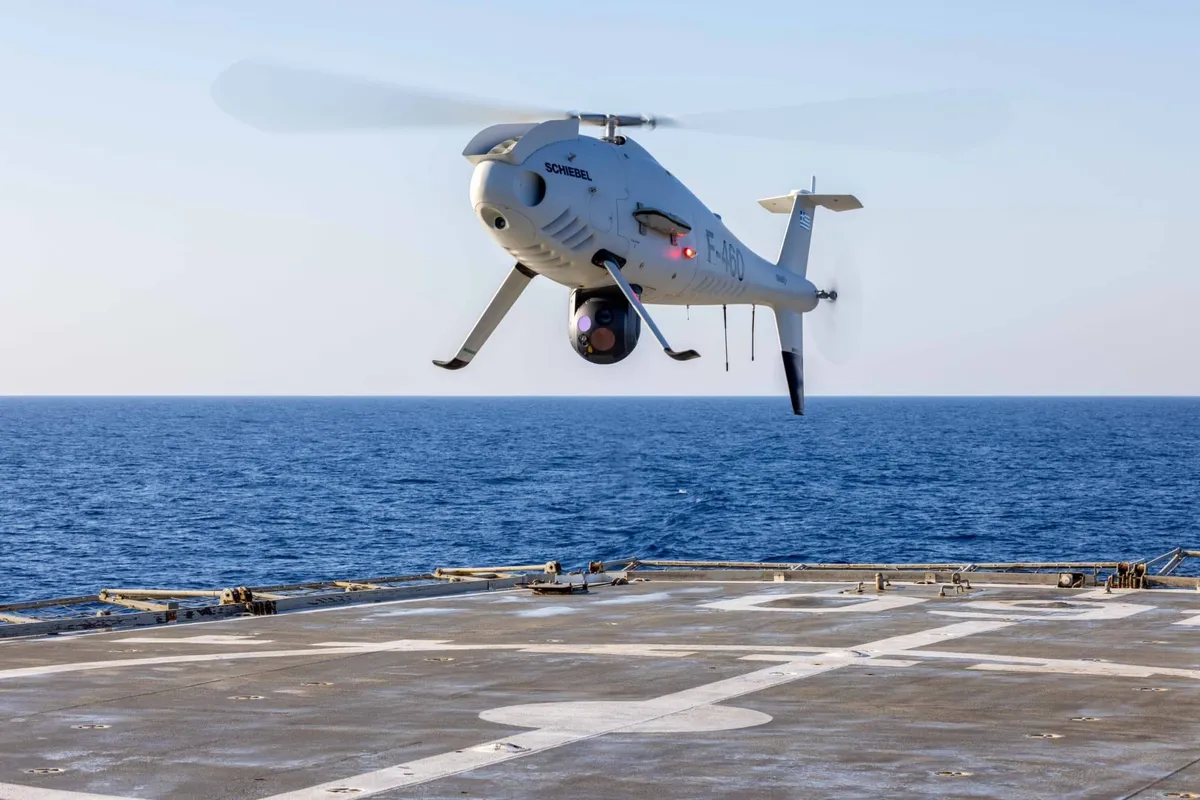
Primary pillar: Power Projection — the S-100 extends frigate sensor range and strike coordination capability, directly affecting surface combatant effectiveness in contested waters (Eastern Mediterranean, Black Sea approaches).
Secondary pillar: Market Forces — Schiebel's selection on a NATO frigate class is a competitive win that may influence procurement decisions across similar European platforms, particularly among EU navies. Limited cross-pillar relevance to geopolitical friction unless this reflects deliberate Greek pivot away from U.S. systems, which the article does not confirm.
This is a vendor lock-in signal for a new NATO frigate class.
Schiebel (Austrian, EU-owned) now has a foothold on Greece's primary surface combatants at a moment when NATO navies are standardizing UAS across new-build frigates. The FDI HN is a Navantia design already adopted by Spain and Portugal; if Greece's choice influences other FDI operators or future European frigate procurements, Schiebel's market position expands materially.
Conversely, this suggests U.S. vendors (Textron RQ-180 or similar) did not win the competition, indicating either cost advantage for Schiebel, interoperability preference for Austrian systems, or Greek strategic preference for non-U.S. suppliers on this tier of asset. The spring 2026 deployment is near-term and testable. Watch whether other FDI operators (Spain, Portugal) follow Greece's choice or diverge.
The article does not disclose the contract value, technical evaluation criteria that favored the S-100 over competitors, or whether this reflects a broader Greek defense procurement strategy toward European vendors over U.S. alternatives.
Fault Lines
Strategic intelligence, synthesized daily — with a public track record. Every call graded against what actually happened.