French Navy Intercepts Russian Shadow Fleet Tanker; Sanctions Enforcement Expands Beyond Strait Patrols
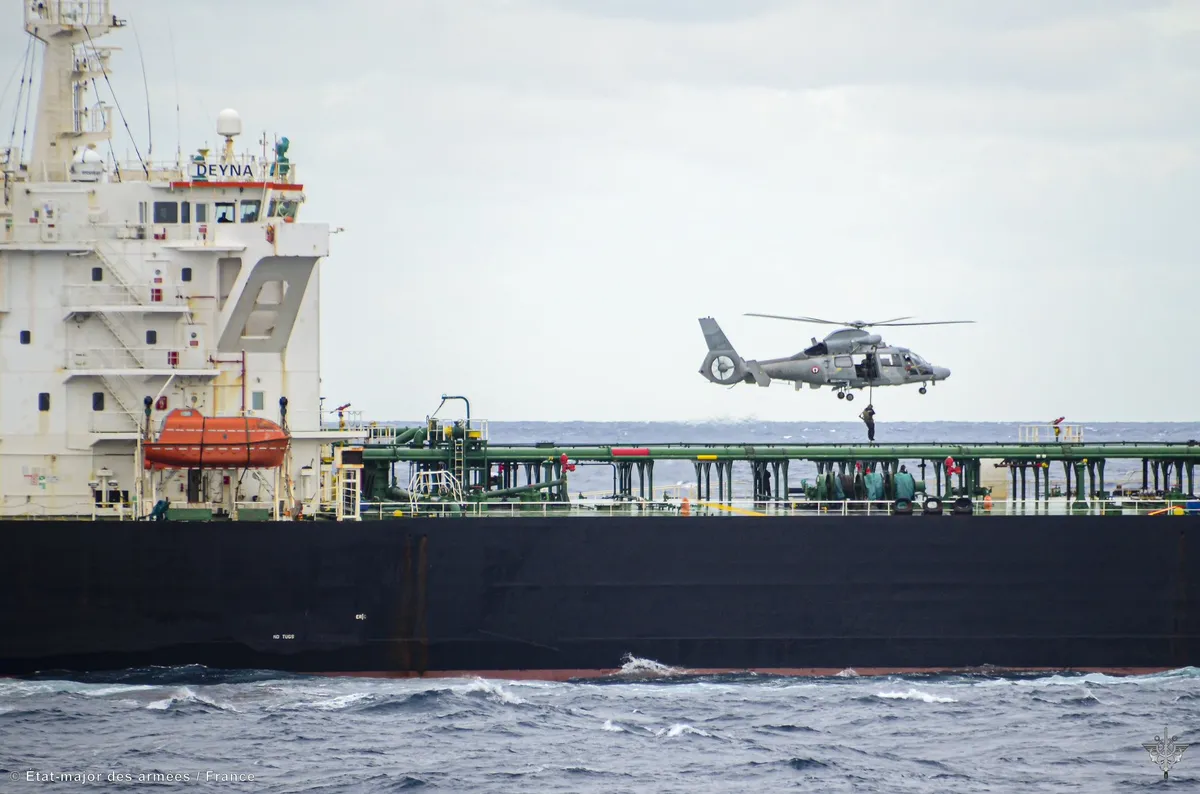
This enforcement action occurs as Iran has shifted to selective Strait of Hormuz blockade (per March 20 signal) and seven NATO allies have announced readiness for Hormuz escort operations (per March 19 signal).
France's Mediterranean interception suggests NATO is now executing a two-layer sanctions enforcement strategy: (1) multinational naval patrols at chokepoints (Hormuz, Suez) to manage Iranian blockade risk and protect allied shipping, and (2) distributed high-seas enforcement against Russian shadow fleet to compress non-sanctioned Russian energy export routes.
This signals a tactical shift in how NATO allies are executing sanctions against Russian shadow fleet operations.
Rather than waiting for tankers to transit known straits (Hormuz, Suez, Malacca), France is now conducting high-seas enforcement in open Mediterranean waters. This expands the geographic cost of sanctions evasion and raises operational risk for ship operators and insurers willing to work with Russian energy exports.
However, the article does not specify whether Deyna was carrying Russian oil, whether it will be seized, or what legal mechanism France invoked — all critical to assessing whether this is a one-off interdiction or the start of a systematic enforcement campaign.
The precedent matters: if sustained, this forces Russian shadow fleet operators to reroute through longer, costlier paths (around Africa, through Arctic) or seek non-European insurance and port access, compressing margins on Russian energy sales and potentially raising global oil prices if supply is further constrained.
The article does not state whether Deyna was carrying sanctioned cargo, whether France plans to seize the vessel, or what legal authority (EU sanctions, international maritime law, etc.) France invoked for the stop.
Fault Lines
Strategic intelligence, synthesized daily — with a public track record. Every call graded against what actually happened.