Strait of Hormuz Closure Traps 15,000 Cruise Passengers; Supply Chain Chokepoint Now Contested
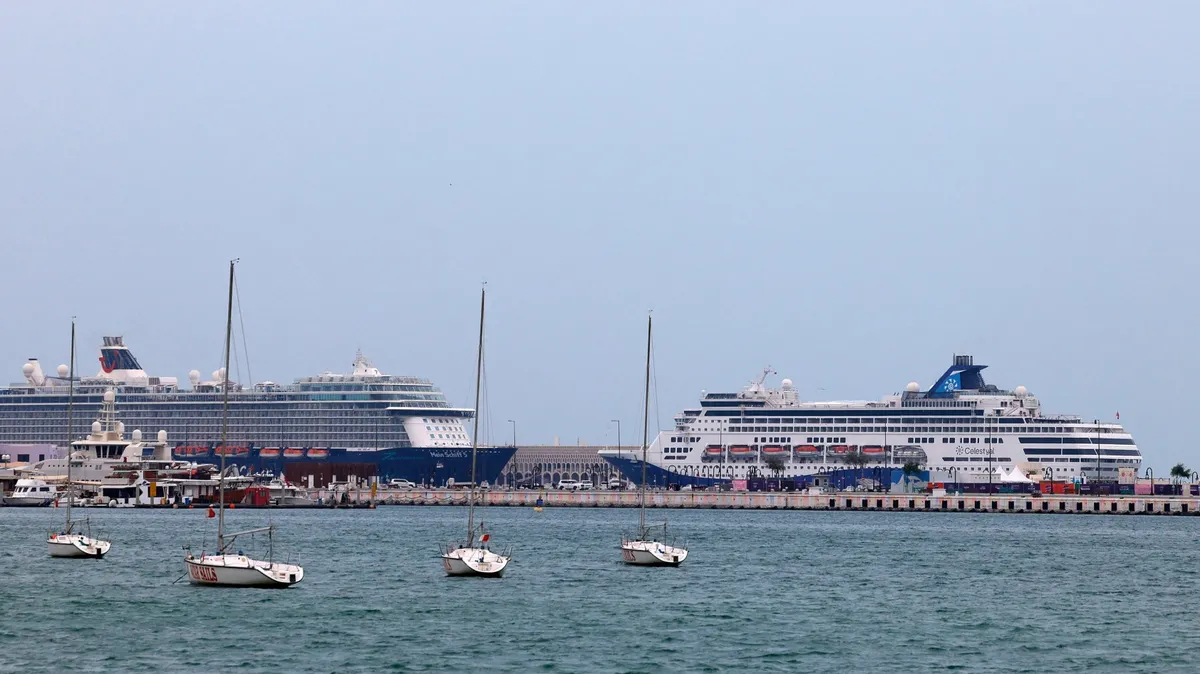
Strait closure forces energy-dependent allies (Japan, South Korea, Germany) to compete for spot LNG and accelerate strategic reserves drawdown, which shifts their near-term defense posture toward air defense and naval procurement to secure sea lanes independently.
Simultaneously, the presence of 15,000 stranded civilians raises the cost of any US or Israeli strike that risks merchant shipping, creating a tactical constraint on the air campaign that did not exist before the conflict expanded to the maritime domain.
The Strait of Hormuz carries roughly 21% of global oil trade; a functional closure forces spot LNG prices higher and extends lead times for energy-dependent allied economies (Japan, South Korea, Europe).
For defense primes, this accelerates procurement timelines for allied air defense and naval systems in the Indo-Pacific as regional powers hedge against energy disruption.
More immediately, stranded civilian vessels create a liability and hostage dynamic that constrains US-Israeli operational freedom — any strike that damages merchant shipping or cruise infrastructure becomes a diplomatic cost that was not present 72 hours ago.
The article does not specify whether Iran, the US, or Israel is actively blocking the Strait, or whether closure is de facto (ships refusing transit due to conflict risk) versus de jure (naval blockade). It also does not quantify oil flow disruption or provide IMO's timeline estimate for reopening.
Fault Lines
Strategic intelligence, synthesized daily — with a public track record. Every call graded against what actually happened.