US Air Defense Redeployment to Middle East Exposes South Korean Deterrence Gap
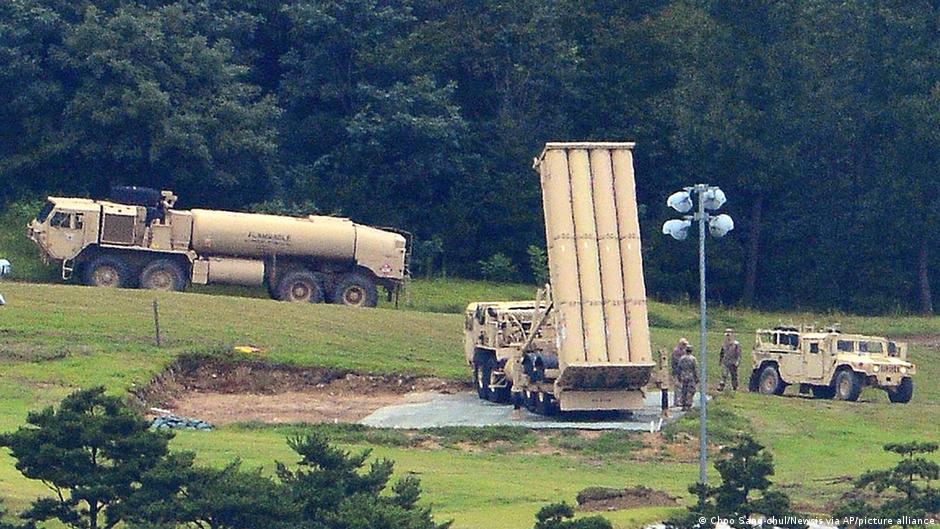
The redeployment directly competes with allied air defense needs in Europe and the Indo-Pacific. If US production cannot sustain simultaneous Middle East combat operations, Korean peninsula deterrence, and NATO air defense modernization, one of these three will be under-resourced.
This forces South Korea to either accelerate indigenous systems (Cheongung, KM-SAM) — creating a procurement signal to Hanwha and LIG Nex1 — or negotiate with the US for hard commitments on system quantities and arrival dates, which will surface in 2026 defense negotiations and potentially delay allied European deliveries.
This reflects a real allocation trade-off: US air defense inventory — particularly THAAD and Patriot systems — is finite, and intensive Middle East operations are consuming stocks faster than production replenishes (per Nikkei Asia reporting from March 17).
South Korea's deterrent posture against North Korean ballistic and cruise missile threats now depends on either (1) accelerated US production, (2) South Korean self-sufficiency via Cheongung/KM-SAM systems, or (3) a de-escalation in the Middle East that frees systems for redeployment.
If Middle East conflict sustains beyond Q2 2026, South Korea may accelerate indigenous air defense procurement or demand binding US commitments to specific system quantities and response timelines — creating a secondary procurement surge in the Indo-Pacific that competes with allied demand in Europe.
The article does not specify which air defense systems are being moved, their quantities, or the timeline for redeployment.
Fault Lines
Strategic intelligence, synthesized daily — with a public track record. Every call graded against what actually happened.