Navy Requests 676 Standard Missiles for FY27; SM-6 Surge Reflects Gulf Attrition
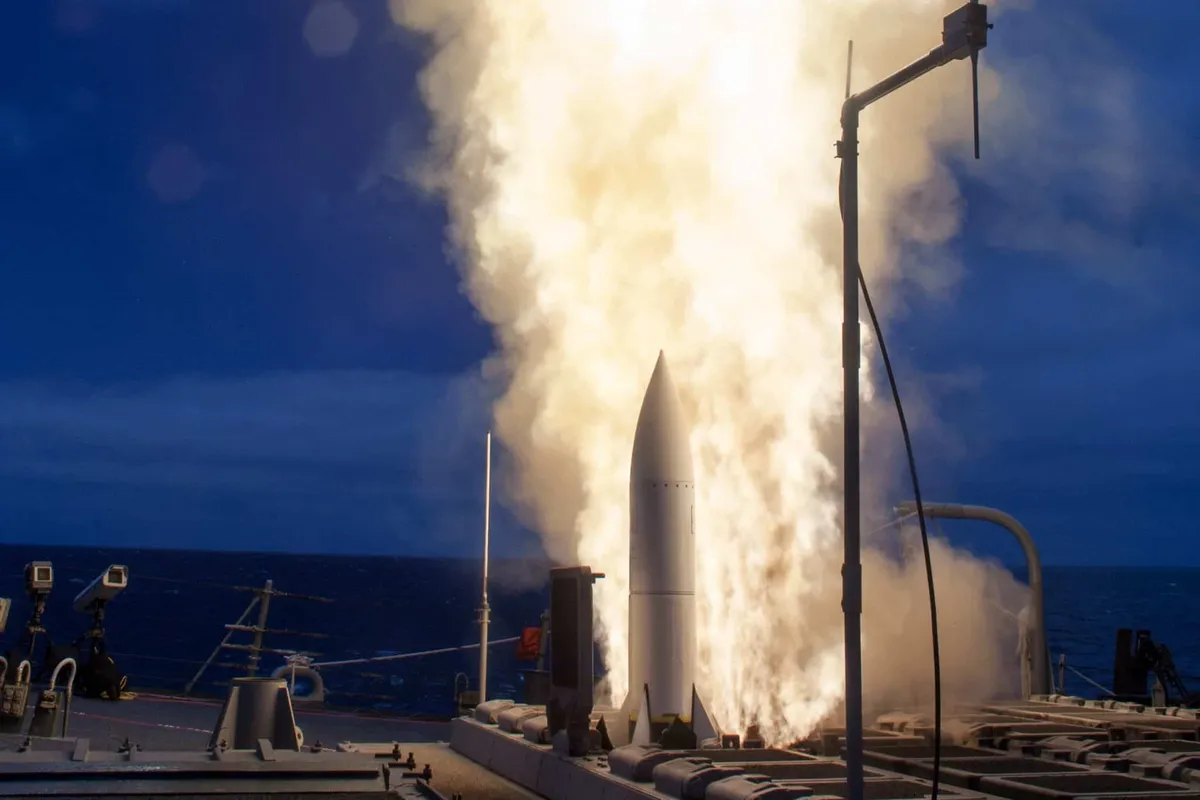
The SM-6 procurement directly funds the replenishment of inventory consumed in the active Iran campaign.
If current burn rates exceed production capacity through 2027, the Navy faces a choice: either accept lower air defense saturation margins in the Gulf (increasing vulnerability to coordinated Iranian drone swarms, as demonstrated by the April 15 Chinese satellite-guided strikes), or delay other air defense modernization (Aegis upgrades, AMDR integration) to prioritize SM-6 production.
This creates a procurement-to-readiness bottleneck that will surface in Pacific Command planning cycles—if SM-6 stocks remain constrained, the Navy cannot simultaneously sustain Gulf operations AND maintain the air defense density required for Taiwan contingency planning.
This procurement surge directly responds to active air defense depletion in the Persian Gulf.
SM-6 inventory consumption is accelerating due to sustained Iranian drone and missile attacks against U.S. naval formations and Gulf bases over the past six weeks—the same conflict that forced Ukraine to ration Patriot interceptors and prompted the Senate to block a war powers resolution halting Iran operations on April 15.
The 540 SM-6 units cannot be replenished before FY2027 execution (likely late 2026 or 2027), meaning current Gulf deployments are operating on diminishing stocks. SM-3 procurement (136 units) signals sustained concern over ballistic missile threats from Iran and North Korea, but the SM-6 emphasis indicates the Navy has classified drone/cruise missile saturation as the primary near-term air defense challenge.
Raytheon Technologies (RTX) is the sole SM-6 prime and will see production rate acceleration; the timing gap between request and delivery creates a window where operational commanders must manage inventory constraints against persistent threat tempo.
The request does not specify: (1) which SM-6 block variant is being procured (Block I vs. Block II), which affects interoperability with existing fleet air defense systems; (2) the unit cost per missile or total program value; (3) production rate assumptions or whether Raytheon has signaled capacity...
Fault Lines
Strategic intelligence, synthesized daily — with a public track record. Every call graded against what actually happened.