Royal Navy Capacity Crunch Exposed as UK Commits to Hormuz Escort Role
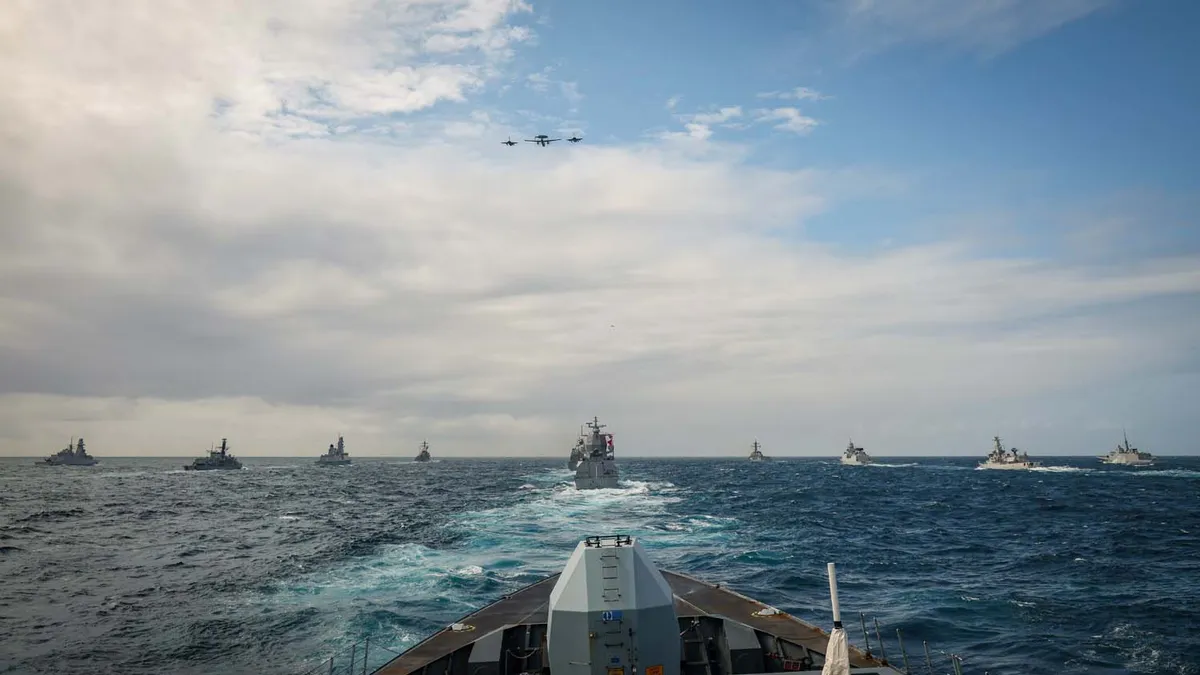
UK Hormuz commitment forces a hard choice between regional crisis response and NATO alliance readiness, creating procurement pressure on UK shipbuilders to accelerate Type 26 frigate delivery.
If the Royal Navy commits 2-3 major units to the Gulf for weeks or months, it reduces escorts available for NATO exercises and North Atlantic deterrence, potentially widening the UK's ability to respond to simultaneous crises (e.g., Russian activity in the Norwegian Sea or Black Sea).
This drives BAE Systems and Babcock to front-load Type 26 production to backfill the capacity gap, but also signals to NATO that UK naval capacity is now a binding constraint on alliance flexibility in multiple theaters.
The UK is signaling intent to assume primary responsibility for Hormuz transit security during active Iranian strikes and retaliation (per March 27-30 signals).
This compounds an existing readiness problem: the Royal Navy currently lacks sufficient frigate and destroyer capacity for sustained Gulf operations while maintaining NATO commitments in the North Atlantic and European waters. If the UK deploys a task group of 2-3 major surface combatants to the Strait, it will reduce available assets for NATO exercises, deterrence patrols, and contingency response elsewhere.
This exposes a capacity gap that defense procurement cannot close in the near term (Type 45 destroyers and Type 23 frigates are aging; Type 26 frigate production is still ramping).
For BAE Systems and Babcock International (UK shipbuilding primes), this creates pressure to accelerate Type 26 delivery timelines, but also reveals that the UK's current fleet size is insufficient for simultaneous regional crisis and alliance-level commitments.
The article does not specify which Royal Navy units are being considered for Hormuz deployment, the expected duration, or how this commitment affects NATO standing commitments in the North Atlantic and Mediterranean.
Fault Lines
Strategic intelligence, synthesized daily — with a public track record. Every call graded against what actually happened.