IAEA Suspects Half of Iran's Enriched Uranium Remains at Isfahan; Verification Gap Widens Amid Blockade
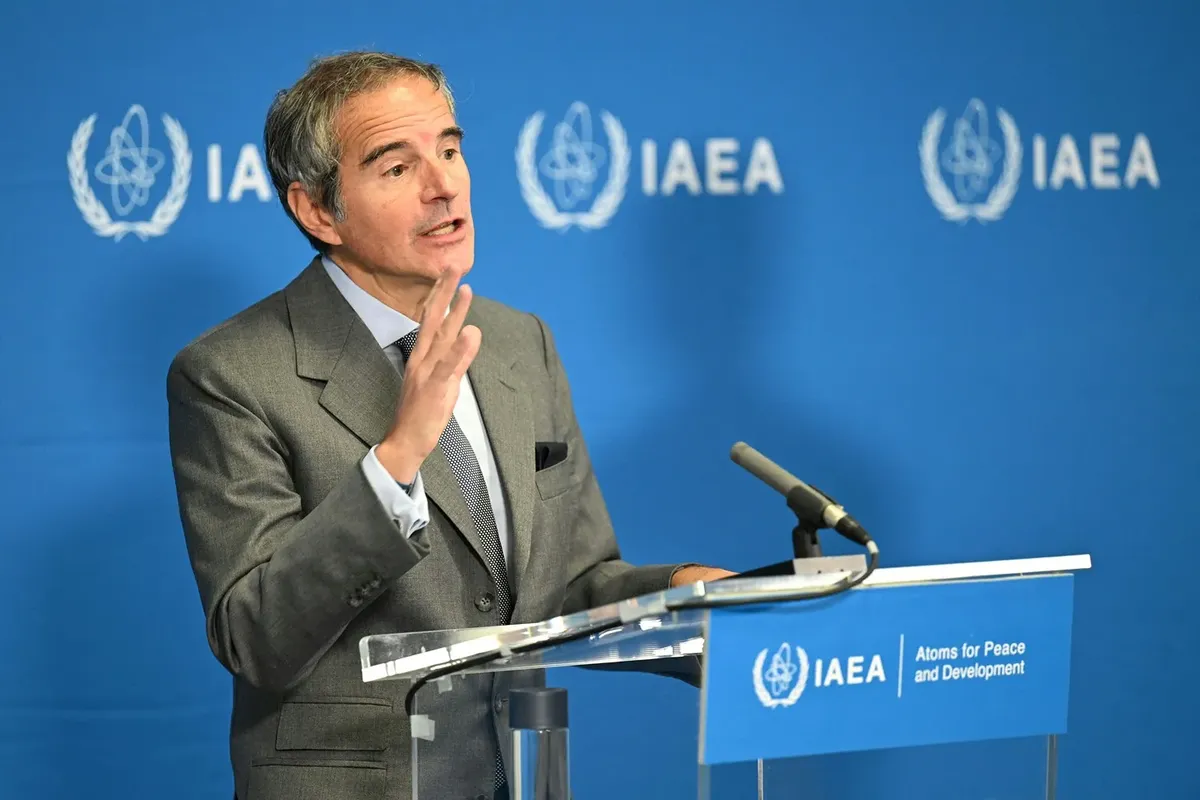
If Isfahan holds 50% of Iran's enriched uranium, a single precision strike campaign becomes operationally viable where a dispersed stockpile would require sustained air operations. This narrows the military window for a non-nuclear strike option and makes Trump's indefinite blockade strategy less necessary — shifting the conflict from economic attrition to kinetic action if negotiations fail.
Concurrently, the IAEA's verification gap undermines any future arms-control agreement, meaning Iran cannot credibly commit to enrichment limits without intrusive inspections Trump has shown no appetite to negotiate.
This matters only if it changes Trump's capitulation demand or Iran's negotiating position — and there's no signal it does either.
Trump has already rejected Iran's nuclear deferral proposal and demanded full capitulation on enrichment. The IAEA's uncertainty about Isfahan doesn't alter that calculus; it actually strengthens Trump's hand by suggesting verification will be harder, not easier. For defense planners, the real issue is whether this stockpile location becomes a strike target.
If half the material is concentrated at Isfahan rather than dispersed, it creates a single point of failure — and a lower-cost targeting option than striking multiple hardened sites. That shifts the cost-benefit of a preventive strike, which is why this detail matters to Centcom and Israeli planning.
The blockade has already crushed Iran's oil exports and forced production below 1.3M bpd; a verified Isfahan concentration could accelerate the timeline for military action if negotiations remain dead.
Has the IAEA actually conducted on-site inspections at Isfahan since the blockade began in early March, or is this assessment based on pre-conflict data and inference?
Fault Lines
Strategic intelligence, synthesized daily — with a public track record. Every call graded against what actually happened.