North Korea Tests Lightweight Cruise Missile System as Part of Artillery Modernization Plan
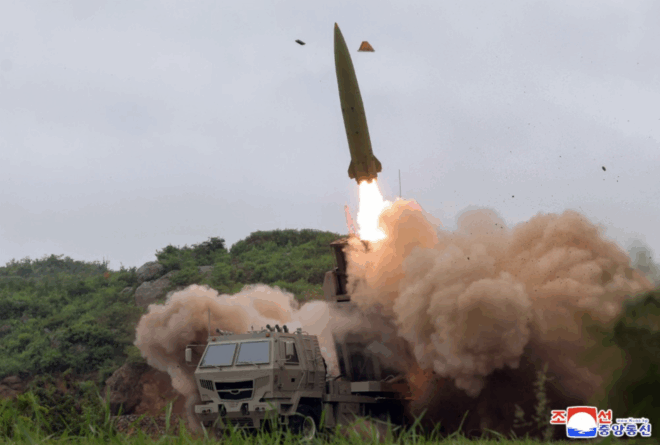
The timing — within 48 hours of South Korea's nuclear submarine announcement and amid the Liaoning carrier group operations in the Philippine Sea — suggests North Korea is signaling that it will not wait for Seoul's long-term deterrent to mature.
If these cruise missiles achieve even 300km range with anti-ship guidance, they force ROKN to operate further from the peninsula and extend escort requirements for merchant traffic through the Korea Strait. That cost shift cascades into Seoul's ability to sustain rotational deployments to the Hormuz escort mission.
South Korea now faces a tactical missile threat that sits between existing North Korean capabilities and the strategic systems it has been tracking.
Seoul's nuclear submarine program (mid-2030s deployment timeline) was framed as a response to North Korean submarine-launched missiles, but this new lightweight cruise system compresses the threat timeline on conventional operations — the Navy must assume these weapons are deployable within 18-24 months, not 2030.
Watch whether South Korea's Joint Chiefs accelerate the interim Jangbogo III submarine procurement or request emergency funding for additional Chieftain air-defense systems in the FY27 budget.
What is the stated range and payload of the new lightweight launcher? The article does not provide technical specifications — without those, the actual threat to South Korean air defenses and ship operations cannot be assessed.
Fault Lines
Strategic intelligence, synthesized daily — with a public track record. Every call graded against what actually happened.