F-22 Deployment to UK Signals Sustained Iran Contingency Posture
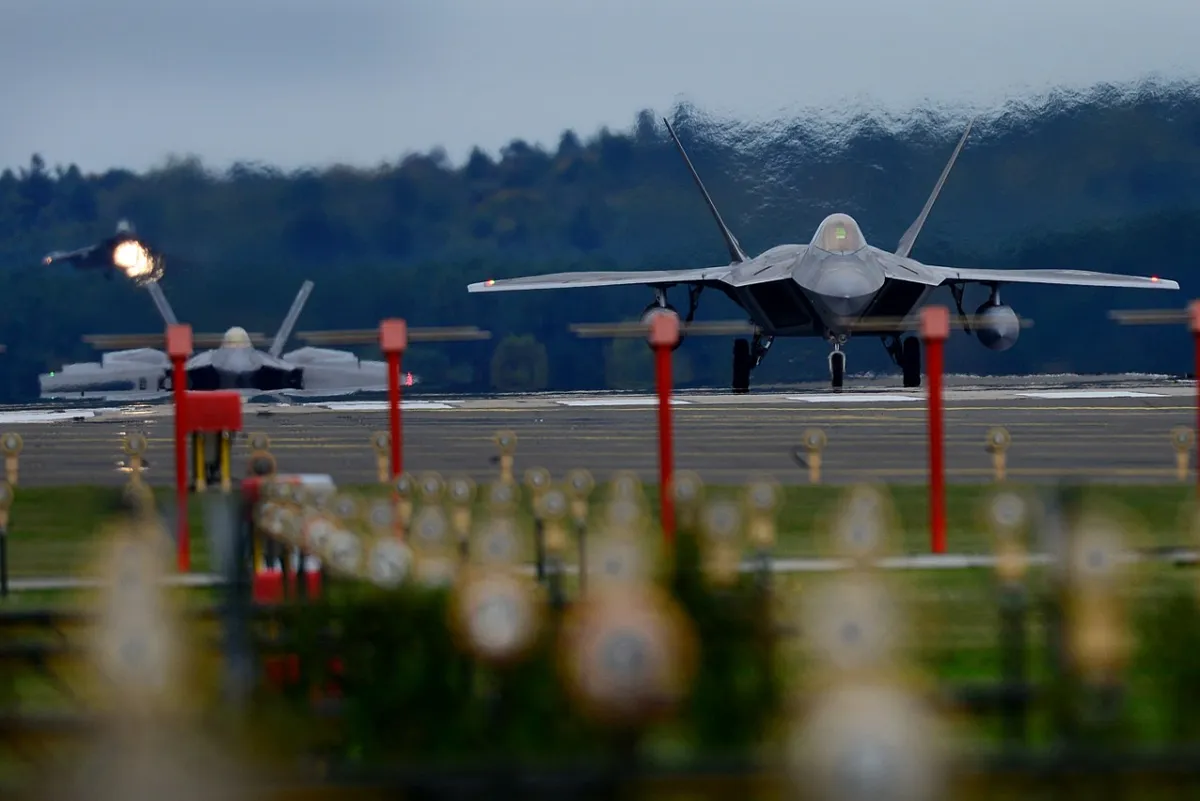
F-22 forward positioning in the UK reduces sortie generation time to the Middle East and North Sea, tightening the decision window for Iran contingency response and potentially accelerating allied air defense procurement decisions in the Gulf (e.g., Saudi, UAE air-to-air missile buys).
If this represents a standing rotational commitment rather than a one-off deployment, it implies sustained demand for transatlantic tanker capacity and may trigger UK discussions on Lakenheath basing costs and NATO burden-sharing contributions.
The F-22 deployment to Lakenheath extends US air superiority capability into the Eastern Atlantic and Mediterranean, reducing response time to Iranian escalation scenarios and signaling allied commitment to regional deterrence.
However, six aircraft represent a modest tactical presence—insufficient for sustained combat operations without rotational reinforcement. The signal's weight depends on whether this is a temporary rotation or the leading element of a larger forward posture shift; the article does not clarify.
For defense contractors, this confirms sustained demand for F-22 sustainment, tanker operations, and base infrastructure at Lakenheath, but does not indicate new procurement or capability gaps.
The article does not specify deployment duration, the triggering event or intelligence assessment that prompted the deployment, whether additional US assets are flowing to the region concurrently, or whether allied air forces (RAF, NATO partners) are coordinating integrated operations around this de...
Fault Lines
Strategic intelligence, synthesized daily — with a public track record. Every call graded against what actually happened.