AUKUS Pillar Two Underwater Drone Project Moves From Concept to Operational Timeline
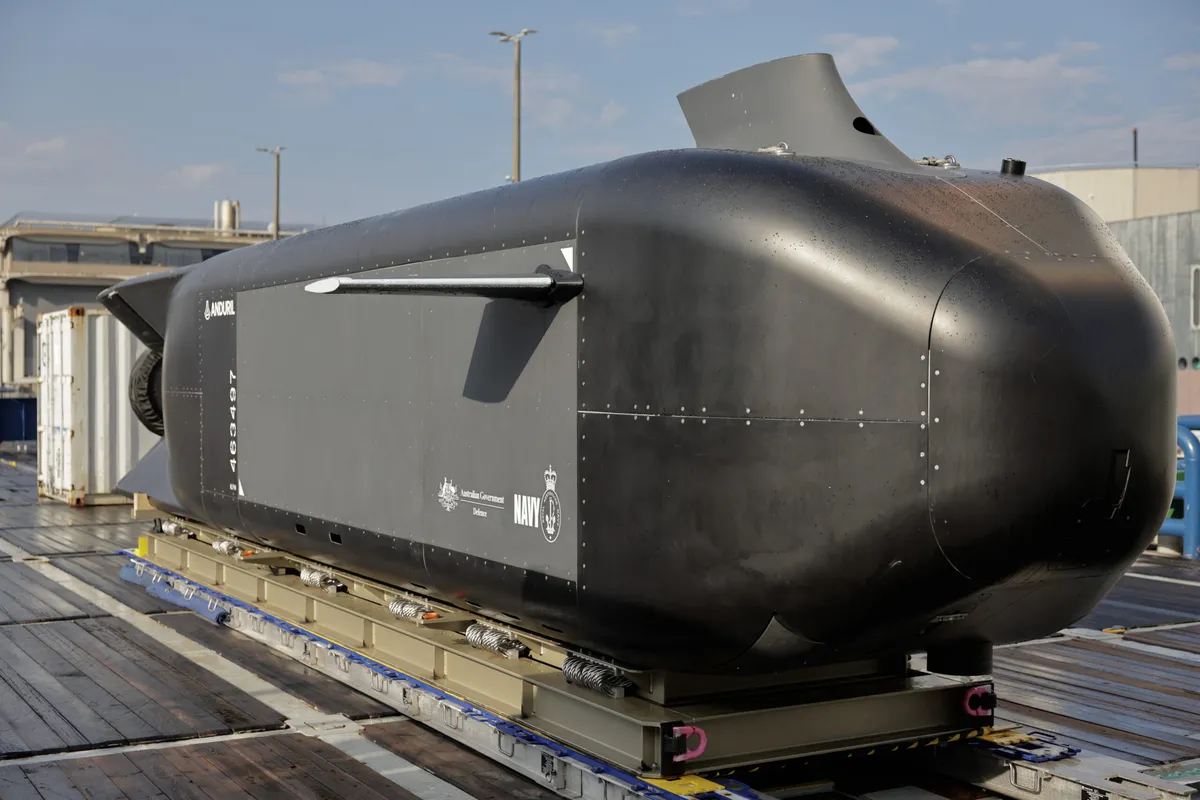
This is incremental in appearance but structural in effect. The announcement itself is thin — a signature project with no budget, no contractor names, no delivery date. But read against the May 30 AUKUS submarine timeline (SRF-West by 2027, Australia's Virginia-class cancellation, the underwater drone agreement), this is the payload layer sitting atop the platform layer.
If the three nations are committing to a joint UUV standard, they're also committing to interoperable fire control and targeting — which means integrated command-and-control architecture across the alliance. That's a NATO-level integration problem. The payoff is force multiplier: one Australian Collins-class submarine carrying a US-standard UUV payload becomes a three-nation ISR asset, not just an Australian asset.
The Indo-Pacific submarine competition just gained a new front.
China's UUV fleet is growing faster than Western navies can track; this project forces the US, UK, and Australia to field a coordinated counter-capability rather than three separate programs bleeding money into redundant R&D.
The mechanism is industrial: a shared payload standard locks Raytheon, Lockheed, BAE Systems, and Australian defence contractors into a single technical specification, which collapses integration timelines from 36 months to 18 and cuts duplicate testing costs.
Timeline matters: if the trio delivers a prototype by 2028, it enters fleet trials during the window when Chinese Type 039C submarines are surging into the South China Sea. Miss that window and the capability becomes a 2031 problem — by which point the operational gap will have widened enough to shift INDOPACOM's force-posture math.
What is the actual payload integration standard — is it a retrofit to existing US Navy UUV platforms (like Riptide) or a new-build design that requires new host vessels? That determines whether Australia and the UK can deploy it from their current submarine classes or need new platforms.
Fault Lines
Strategic intelligence, synthesized daily — with a public track record. Every call graded against what actually happened.