Russia expands child militarization in occupied Ukraine—long-term loyalty strategy
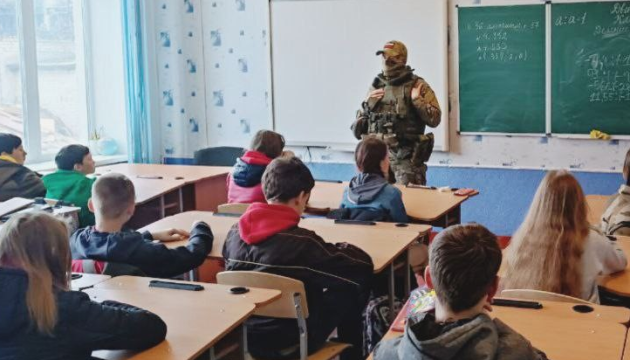
Russia's investment in child-focused indoctrination reduces the probability of voluntary Ukrainian repatriation and increases the political cost of any territorial concession to Kyiv—forcing future negotiations to account for a population cohort with competing loyalties.
This extends the timeline and resource requirements for post-conflict stabilization, which in turn shapes NATO's planning assumptions for forward presence and training commitments in liberated territories. The longer Russia embeds itself administratively and culturally, the more expensive Western-led reconstruction becomes.
This reflects Russia's shift toward consolidating control in occupied territories through generational indoctrination rather than military force alone.
If sustained and scaled, it signals preparation for a prolonged occupation and reduces the likelihood of rapid Ukrainian reintegration of these regions—a key variable in any negotiated settlement. For Western defense planners, this complicates post-conflict reconstruction timelines and raises the cost of territorial recovery.
However, the article offers no evidence of program scale, budget, or institutional backing, so this remains a single data point on Russian occupation strategy rather than proof of a structural commitment.
The article does not specify: how many schools or children are affected; what the curriculum or messaging entails; whether this is centrally directed from Moscow or locally improvised; or what resources (budget, personnel, materials) Russia is allocating to it.
Fault Lines
Strategic intelligence, synthesized daily — with a public track record. Every call graded against what actually happened.