Rheinmetall Projects $16.8B Annual Orders as Active Conflict Drives European Rearmament
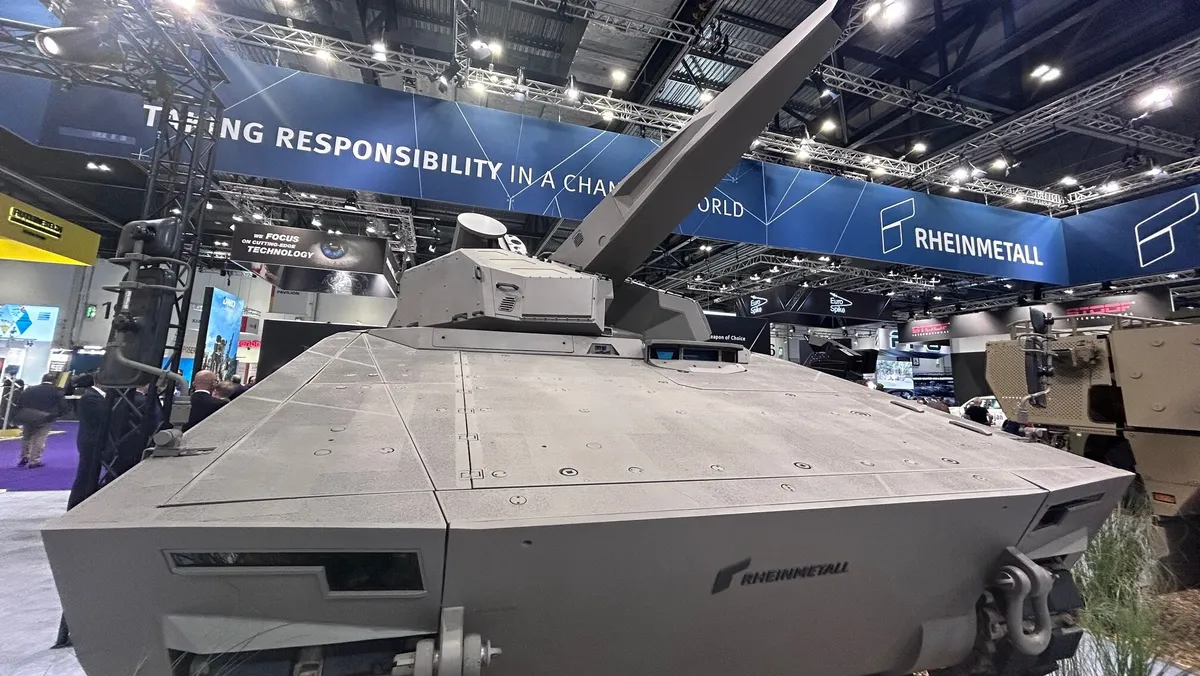
Rheinmetall's production reallocation directly competes with NATO's own rearmament timeline. If Rheinmetall dedicates manufacturing capacity to Middle East orders (air defense for Kuwait/Saudi Arabia, ammunition for Israel), European NATO members will face longer lead times and higher unit costs for their own procurement — forcing either higher defense budgets or delayed force modernization.
Simultaneously, the forecast signals to U.S. primes (RTX, LMT, NOG) that allied European suppliers will capture a portion of Middle East demand that might otherwise flow to U.S. contractors, reshaping the regional industrial base.
This is the first quantified revenue signal from a major European defense industrial base responding to the active Middle East conflict.
The $16.8B figure (if accurate) represents a structural reallocation of Rheinmetall's production capacity away from civilian and dual-use markets into pure defense. This matters because it signals that European primes believe the conflict will sustain demand at elevated levels — not a temporary spike.
For U.S. defense investors, this indicates Rheinmetall and peer European suppliers (Thales, Leonardo, Airbus Defence & Space) will compete for allied procurement contracts in air defense, ammunition, and precision weapons systems.
The timing — announced as Iran continues retaliatory strikes and the U.S. expands regional air defense footprint — suggests Rheinmetall sees sustained orders from Kuwait, Saudi Arabia, UAE, and NATO Europe. The constraint is industrial capacity: if European suppliers redirect production to Middle East demand, NATO's own procurement timelines may face delays or price increases.
The article does not specify which product lines drive the $16.8B forecast (air defense systems, ammunition, missile components, electronic warfare), which customers are committed to orders, or what portion is speculative versus contracted.
Fault Lines
Strategic intelligence, synthesized daily — with a public track record. Every call graded against what actually happened.