Army Doctrine Shift: Static Command Posts Deemed 'Suicidal' Against Modern Adversaries
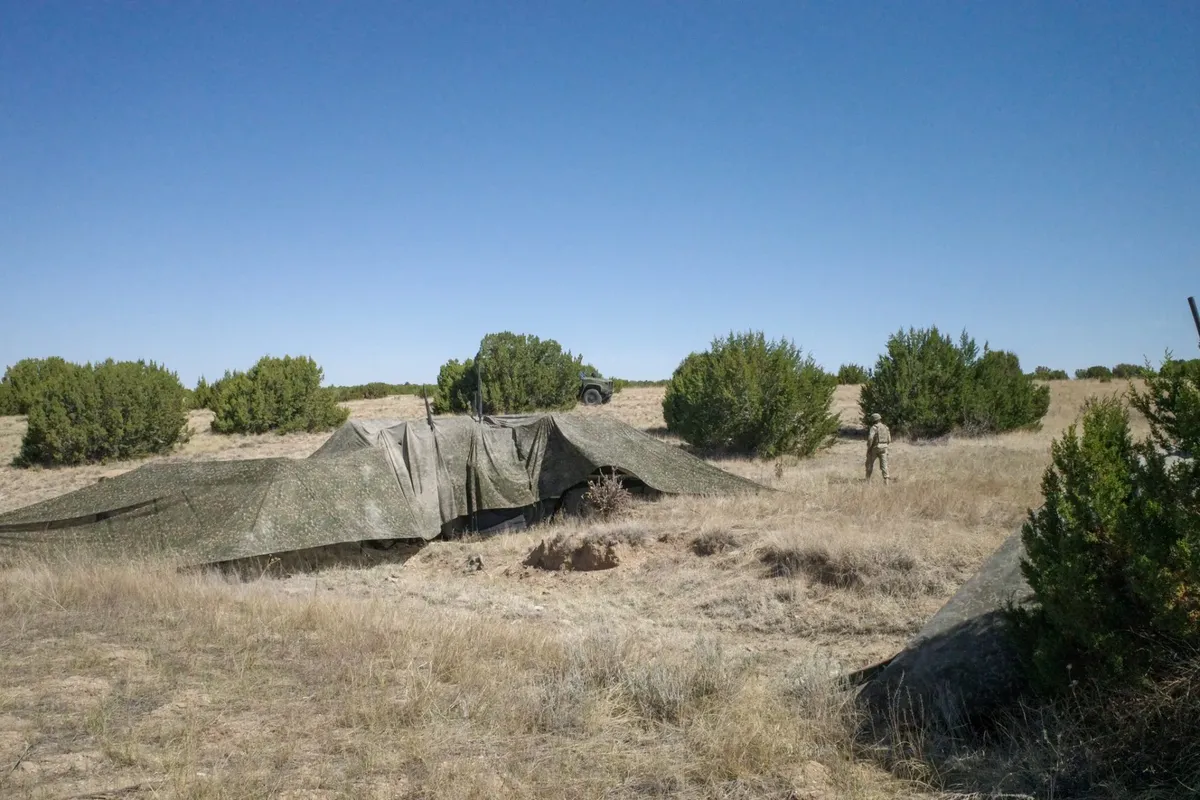
This is not a procurement story — it's a doctrine emergency. The Army is admitting that its entire command structure is designed for an opponent that no longer exists. If static command posts are indefensible, then the division headquarters at Fort Hood, the corps command post in Europe, and the theater army command element in Japan all need replacement architectures.
That's a multi-year, multi-billion-dollar redesign of Army force structure, not a contract award. Second-order: this doctrine shift will force the Army to either (a) accept greater command decentralization and risk fratricide, or (b) invest heavily in mobile, hardened C2 platforms that are themselves vulnerable to EW and cyber. Either path reshapes how the Army fights — and how fast it can fight.
This doctrine shift exposes a fundamental vulnerability in how the Army conducts distributed operations against China or Russia — and forces a complete redesign of command-and-control infrastructure before the next major contingency.
If the Army cannot establish survivable command posts within 18-24 months, INDOPACOM and EUCOM will lack real-time C2 in a Taiwan or Baltic scenario, forcing delegation of fires authority to battalion level and compressing decision cycles below current doctrine. The constraint isn't money — it's architecture.
The Army must now reverse-engineer command post design from threat (peer air defense, electronic warfare, precision strike) backward to capability requirements, which means every existing TOE for division and corps headquarters becomes obsolete. Watch the FY27 budget for line items funding prototype mobile C2 systems and whether TRADOC issues revised command post survivability standards by Q4 2026.
What specific threat assessment drove the 'suicidal' characterization — did the Army model peer strikes on a static corps headquarters, and if so, what survivability rate did they assume?
Fault Lines
Strategic intelligence, synthesized daily — with a public track record. Every call graded against what actually happened.