Austal Secures $4B LCH Contract, Locks Eight-Vessel Build Through 2030s
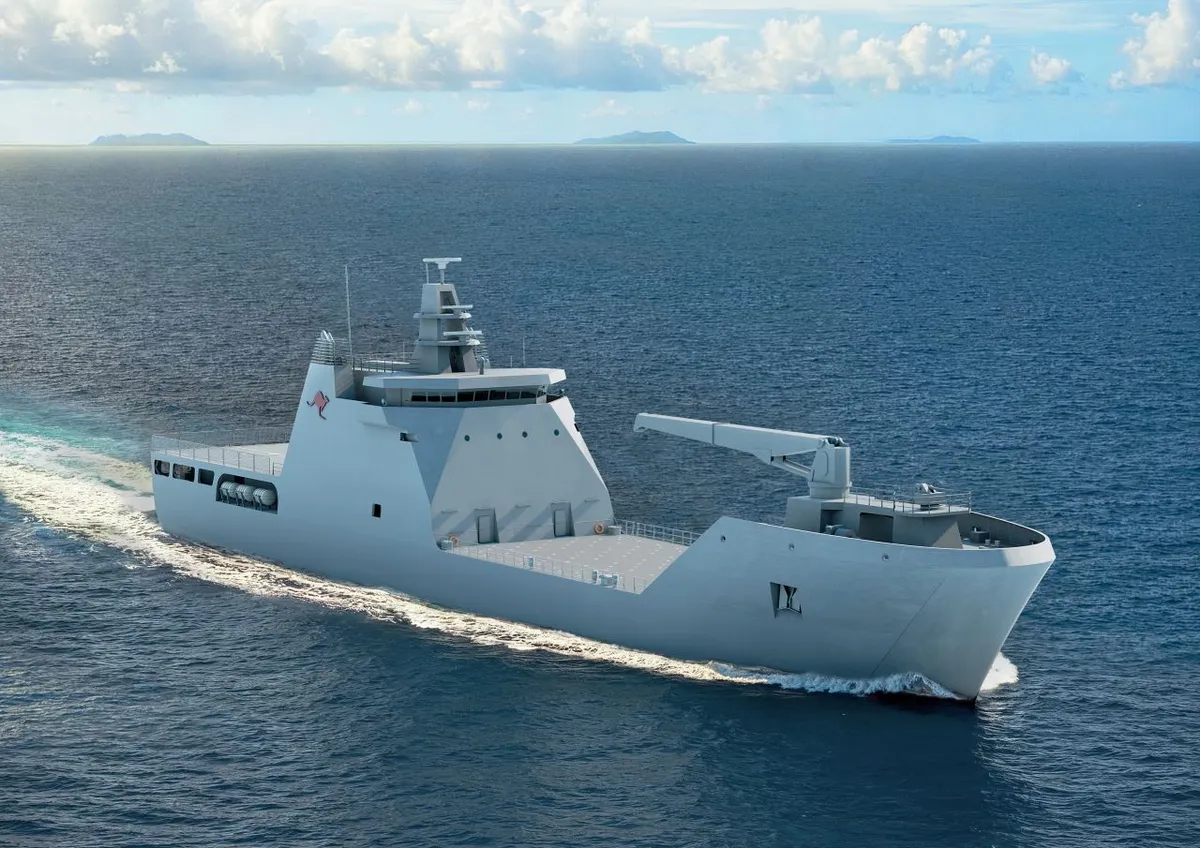
The LCH procurement directly increases Australian amphibious projection capacity in the Indo-Pacific, which shifts the regional balance of sealift available for coalition operations and Taiwan contingency planning.
Austal's capacity commitment to these eight vessels reduces available Australian shipyard bandwidth for future frigates, corvettes, or support vessels — forcing a choice between competing capability priorities and potentially extending timelines for other Royal Australian Navy programs if additional production is needed.
This contract secures sustained work for Austal through the 2030s and commits Australian defense spending to amphibious lift — a capability directly relevant to Indo-Pacific contingencies.
For Austal shareholders, it locks in revenue and production continuity; for U.S. shipbuilders (Austal's U.S. subsidiary operates independently), it represents a competitor's capacity expansion in a region where amphibious sealift is strategically contested.
The contract also signals Australian confidence in domestic shipbuilding execution after the Attack-class submarine delays, which could influence future Australian procurement decisions on whether to source complex vessels domestically or internationally.
The article does not specify the delivery timeline for the eight vessels, the unit cost per LCH, or whether this contract includes options for additional hulls — all of which determine Austal's production capacity allocation and competitor exposure over the next decade.
Fault Lines
Strategic intelligence, synthesized daily — with a public track record. Every call graded against what actually happened.