Jet Fuel Shortage Compounds Hormuz Collapse; Global Air Cargo Faces 4-6 Week Supply Shock
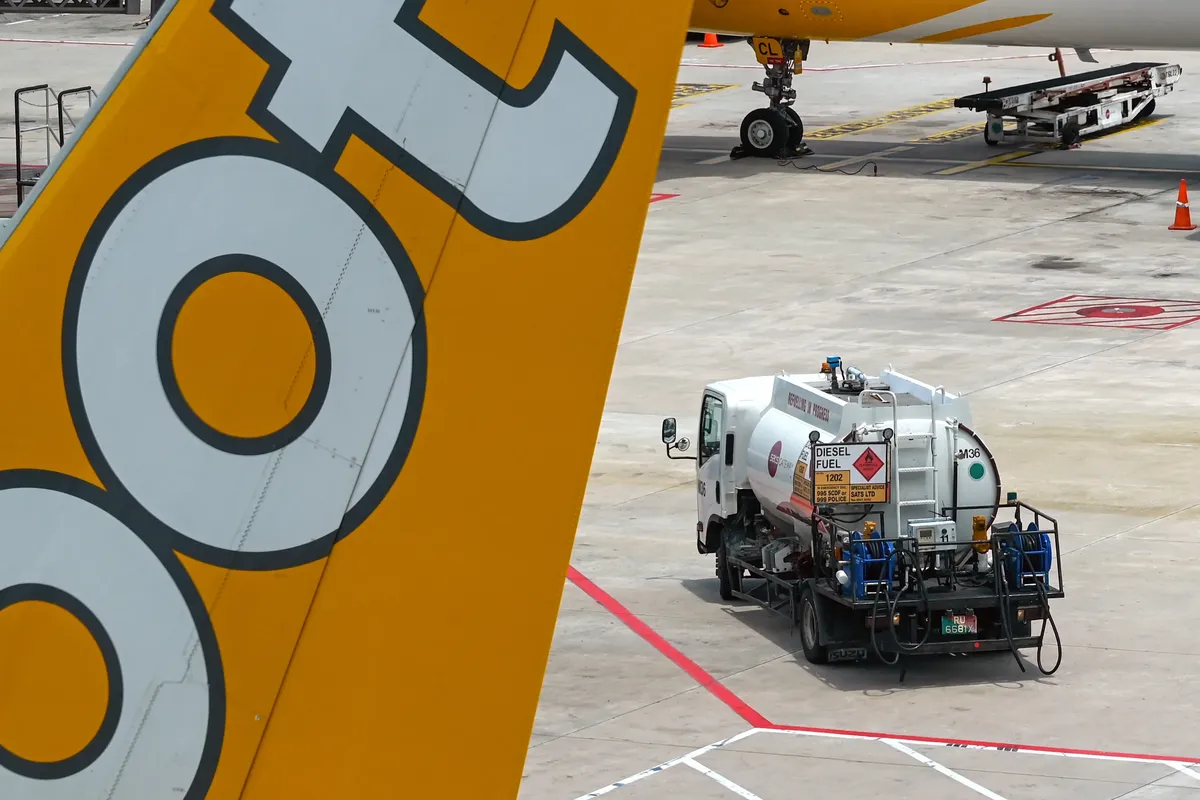
Jet fuel scarcity forces defense supply chains to choose between air freight (cost spike, capacity rationing) and maritime (95% collapse, indefinite delay). Contractors with high air-transport dependency (subsystem suppliers, just-in-time integrators like Flex Ltd., Celestica) will absorb margin compression or push delays into Lot deliveries, cascading into program timelines.
Simultaneously, the fuel cost shock will favor contractors with regional (Middle East, Europe) sourcing over those dependent on distant suppliers, reshaping competitive advantage in allied procurement for the next 12-18 months.
Jet fuel is a direct constraint on air cargo capacity—the only viable alternative to the 95% Hormuz maritime collapse already reported.
If refinery damage reduces regional jet fuel output by even 5-10%, air freight rates will spike faster than maritime rates recover, forcing shippers to choose between cost and speed. This creates a 4-6 week window where air-dependent supply chains (semiconductors, medical devices, time-sensitive components) face simultaneous price shock and capacity rationing.
Defense contractors relying on air transport for subsystem delivery (Raytheon, Lockheed, Boeing) will face either margin compression or schedule delays. The constraint is real only if refinery damage is sustained and global jet fuel reserves don't compensate—both plausible but unconfirmed by this article.
The article does not quantify: (1) how much jet fuel capacity the Kuwait refinery strike removed from regional output, (2) whether other refineries (Saudi, UAE, Iraq) have increased production to offset losses, (3) current global jet fuel inventory levels or days-of-supply, (4) price elasticity of a...
Fault Lines
Strategic intelligence, synthesized daily — with a public track record. Every call graded against what actually happened.