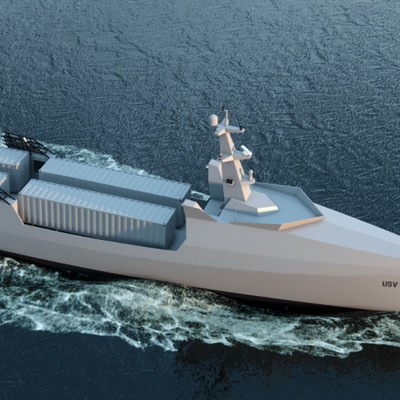
Navy shows interest in autonomous surface vessels; no bulk buys yet
Primarily a Market Forces story. The article describes vendor competition and early customer interest, but does not provide evidence of force design changes, capability urgency, or geopolitical drivers. If the Navy's interest were tied to a specific operational need—e.g., Indo-Pacific presence, anti-ship mine countermeasures, or contested logistics—that would create a Power Projection connection.
The source does not establish that link.
This is an early-stage market signal, not a procurement decision.
Navy interest without bulk orders suggests the service is still in evaluation mode—testing concepts, assessing interoperability, and determining operational doctrine. For vendors, this means sustained R&D spend is necessary but ROI remains uncertain.
For investors in autonomy-focused defense contractors, the gap between 'interest' and 'production contracts' is material: it extends the pre-revenue phase and increases technical risk. Watch whether any vendor secures a follow-on development contract or a pilot deployment order; that would signal the Navy is moving from evaluation to commitment.
The article does not specify which Navy commands are driving interest, which autonomous vessel types are under consideration, what capability gaps they're meant to fill, or whether any vendor has received even a small development contract or demonstration order.
Fault Lines
Strategic intelligence, synthesized daily — with a public track record. Every call graded against what actually happened.