B-1 Fleet Concentration at RAF Fairford Reaches 12 Aircraft; Sustained Campaign Infrastructure Now in Place
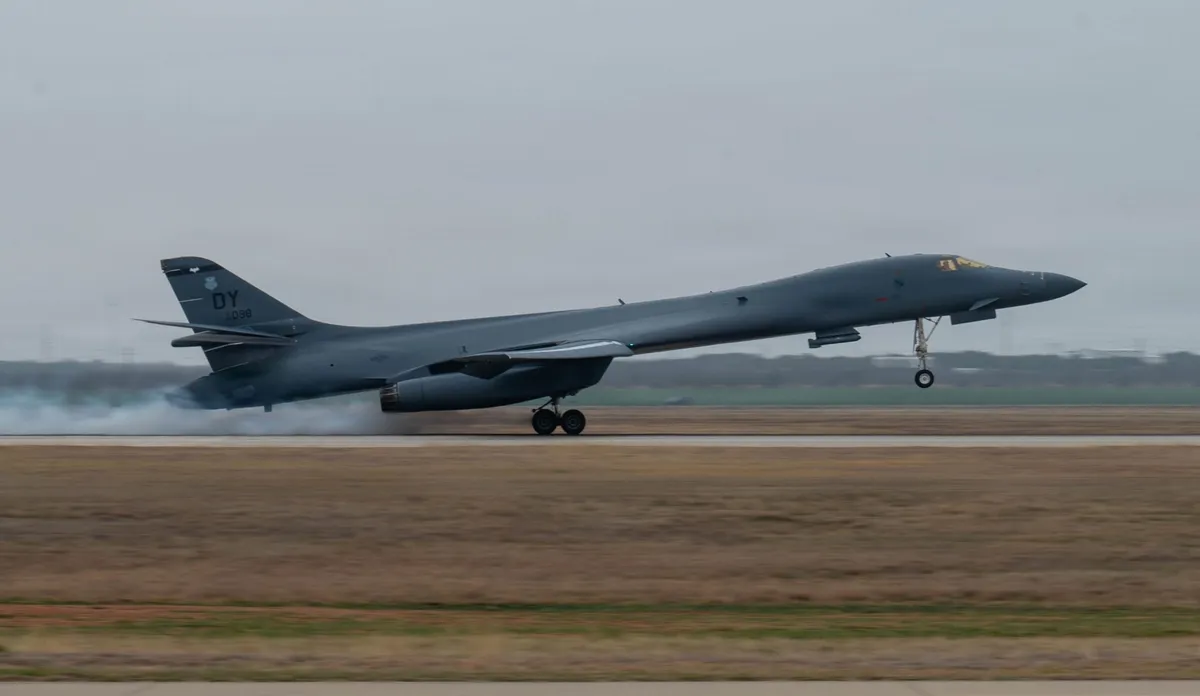
The forward concentration of B-1s at RAF Fairford commits U.S. and UK logistics to a sustained nuclear-targeting campaign, which locks allied procurement into bunker-buster and deep-strike sustainment and creates a political hostage in UK airspace.
If Iranian air defenses degrade B-1 sortie rates or attrition rises, the U.S. will face pressure to either escalate with additional platforms (B-2s already committed; F-15E or F-16 surge required) or negotiate—either outcome reshapes allied procurement timelines and defense industrial capacity allocation.
This buildup signals transition from episodic strikes to sustained campaign infrastructure.
B-1s have been the primary platform for penetrating Iranian hardened facilities (Parchin strike on March 12 used GBU-57 Massive Ordnance Penetrators); concentrating over half the mission-capable fleet at a single forward base indicates the U.S. intends continued deep-strike operations rather than one-off raids.
For defense primes, this locks in sustained demand for bunker-busters (Northrop Grumman GBU-57 production), B-1 sustainment (Rolls-Royce engines, avionics), and forward logistics. The constraint: RAF Fairford's operational tempo ceiling and UK political tolerance for sustained U.S. strike operations from British soil.
If the campaign extends beyond 2-3 weeks, fatigue, maintenance, or political pressure could force dispersal or rotation, reducing strike frequency.
The article does not specify sortie rates, turnaround times, or ammunition consumption against Parchin and other hardened targets—data needed to estimate how long this fleet can sustain current operational tempo before requiring rotational relief or resupply.
Fault Lines
Strategic intelligence, synthesized daily — with a public track record. Every call graded against what actually happened.