Embraer Delivers First C-390 Millennium to Czech Air Force; Fifth NATO Customer Enters Tactical Airlift Market
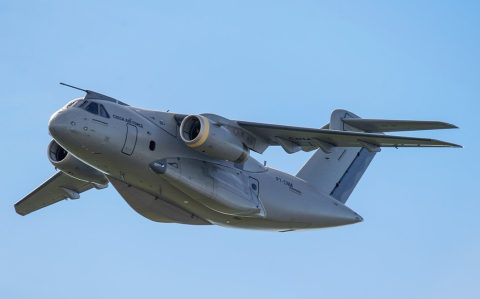
The Czech order is a beachhead for Embraer in European defense procurement — not primarily a logistics story, but a trade policy one. Brazil's defense industrial base has been locked out of US-led military-industrial circles for decades; the C-390 sale to a NATO member breaks that pattern and suggests Brussels is willing to diversify airframe sourcing away from Lockheed Martin's monopoly on allied tactical lift.
If Poland or Romania follow, Embraer gains a second-tier NATO foothold and the leverage to demand industrial participation (final assembly, avionics integration) in Europe — a manufacturing win for Brazil and a supply-chain fragmentation risk for Lockheed Martin's C-130J sustainment margins.
Czech induction into the C-390 ecosystem locks a NATO ally into a non-US tactical airlift platform, fragmenting allied logistics interoperability at a moment when Ukraine's logistics demands and INDOPACOM's distributed operations doctrine both require standardized transport across coalition partners.
The Czech purchase signals that Embraer has cleared the political hurdle of selling into NATO — a precedent that opens the door for Poland, Romania, and the Baltic states, each of which faces aging An-26 fleets and limited C-130J availability.
If three more NATO members adopt the C-390 by 2028, the alliance will have two incompatible tactical airlift networks (US C-130J/MC-130J and Brazilian C-390), complicating joint operations planning and spare-parts logistics during a peer conflict. Watch for Polish defense ministry procurement decisions in late 2026 — Poland has already signaled interest and controls the eastern NATO logistics corridor.
Does NATO have a formal interoperability standard for tactical airlift, or does each member state retain unilateral platform selection authority? If the latter, how many additional NATO members are in active procurement talks with Embraer?
Fault Lines
Strategic intelligence, synthesized daily — with a public track record. Every call graded against what actually happened.