DIU-Navy Contract Expands Autonomous Submarine Capability; Anduril Dive-XL Enters Prototype Phase
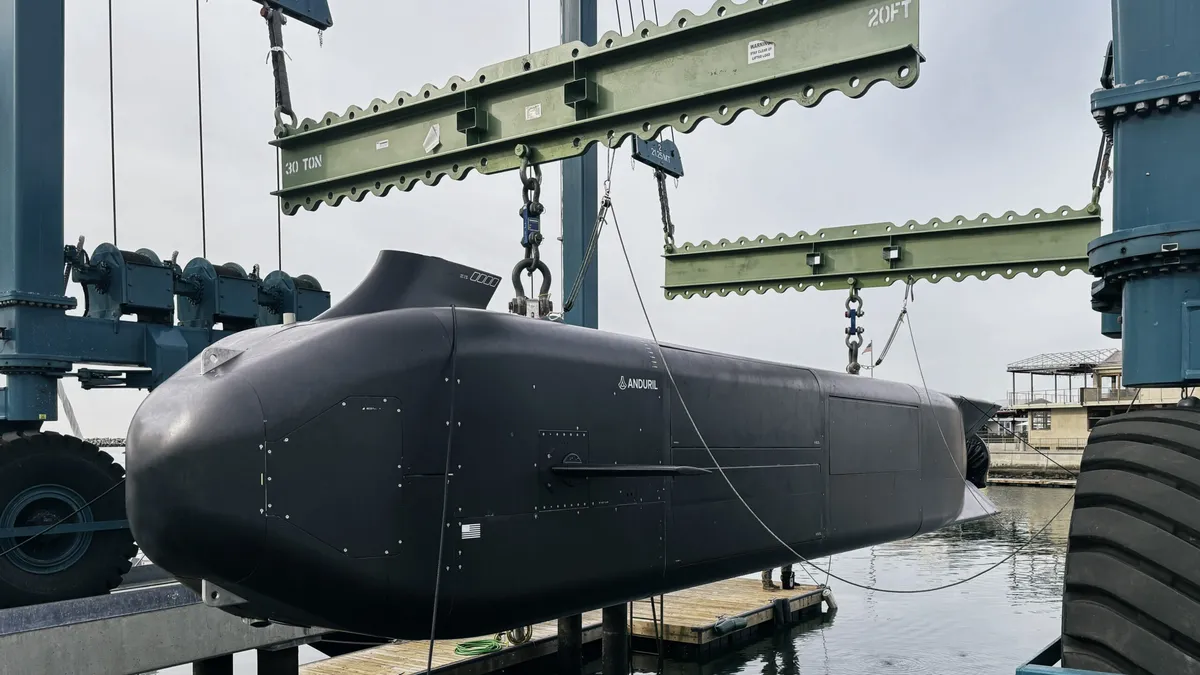
Autonomous undersea platforms reduce surface ship exposure during sustained operations in the Taiwan Strait and South China Sea, where Chinese anti-ship missiles create cost-exchange pressure against traditional carrier and destroyer deployments.
If Dive-XL achieves operational readiness within 18-24 months, it could shift Pacific Command's force mix away from manned surface combatants toward distributed, attritable ISR nodes — a procurement lever that directly competes with traditional destroyer and frigate line items in FY27-FY28 budget cycles.
This procurement advances distributed undersea ISR and strike capability at a time when the U.S. is reinforcing allied presence in the Indo-Pacific against Chinese naval expansion.
The Royal Australian Navy's existing Ghost Shark deployments provide operational validation; the Dive-XL prototype accelerates transfer of that proven design into the U.S. inventory. Anduril's selection also signals DIU confidence in commercial-scale autonomous platforms as alternatives to traditional large-platform ASW.
However, the article provides no timeline, unit cost, or planned deployment numbers — critical inputs for assessing whether this closes capability gaps or remains a technology demonstration.
The article does not specify prototype delivery timeline, production cost per unit, planned inventory size, or whether Dive-XL is intended to supplement or replace existing autonomous systems like the Orca XLUUV.
Fault Lines
Strategic intelligence, synthesized daily — with a public track record. Every call graded against what actually happened.