Philippines-France Defense Pact Formalizes South China Sea Deterrence Without Binding Commitment
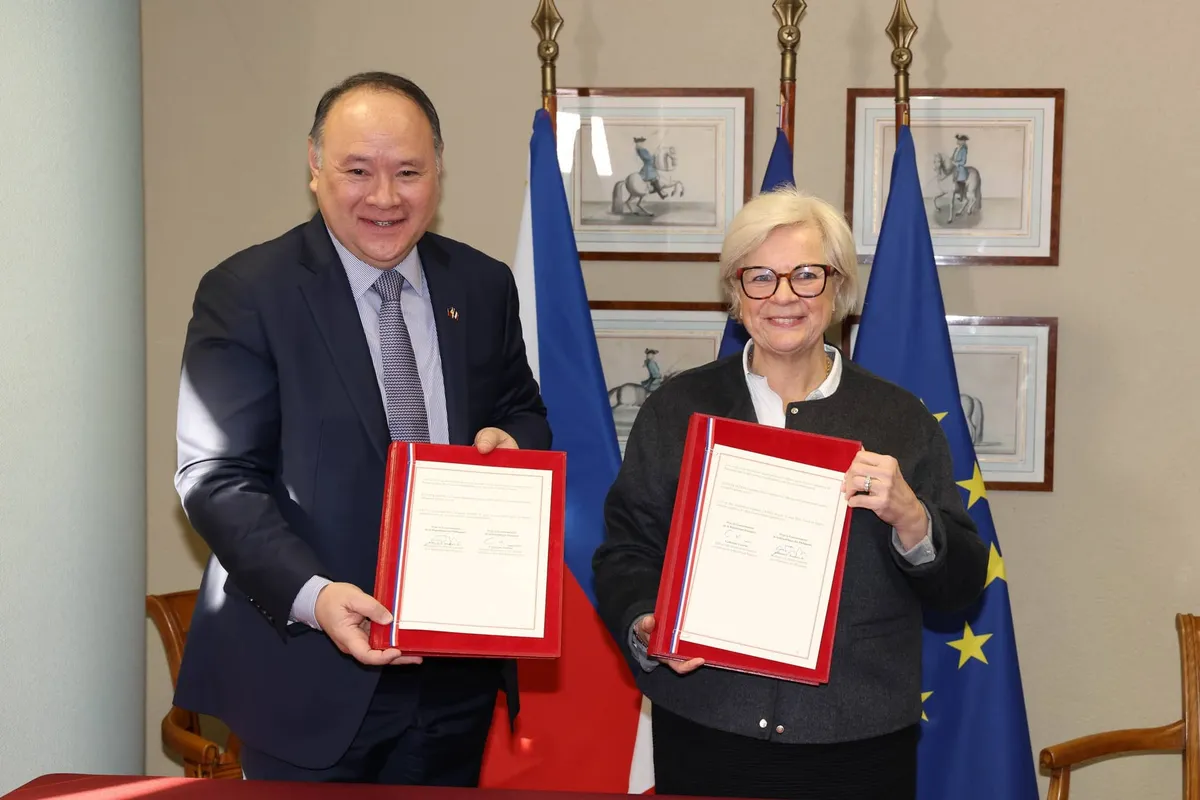
The VFA accelerates the Philippines' hedging strategy at a moment when US strategic attention is bifurcated between Middle East conflict (50,000+ troops deployed as of March 25) and Indo-Pacific deterrence.
If France commits sustained naval rotations to South China Sea exercises, this shifts the cost of Chinese assertiveness upward by adding a NATO-aligned power to the deterrence calculus—but only if French presence is predictable and armed. Conversely, if the VFA remains a symbolic training agreement without operational teeth, Beijing faces minimal new constraint.
This formalizes France's Indo-Pacific presence as a non-alliance hedging tool for Manila, but does not create binding defense obligations.
For Manila, the VFA reduces operational friction with a major naval power and signals diversification away from sole reliance on US security guarantees—relevant given South Korea's concurrent move toward wartime command independence (March 27 signal).
For French defense primes (Thales, Naval Group, DCNS), the pact creates access to South China Sea training corridors and potential follow-on procurement opportunities in Philippine naval modernization. However, a VFA is a lower-commitment instrument than a mutual defense treaty; it enables presence without triggering Article 5-type escalation dynamics.
The timing—amid active Middle East conflict consuming US attention and 50,000+ US troops deployed there—suggests Manila is testing whether France can partially substitute for US bandwidth in the region. The real constraint is French naval capacity; France maintains only 2-3 frigates in the Indo-Pacific on rotation, limiting deterrent effect against Chinese coast guard or PLAN operations.
The article does not specify whether the VFA includes provisions for French weapons sales, technology transfer, or co-production arrangements.
Fault Lines
Strategic intelligence, synthesized daily — with a public track record. Every call graded against what actually happened.