Marines adopt Air Force drone for autonomous wingman development
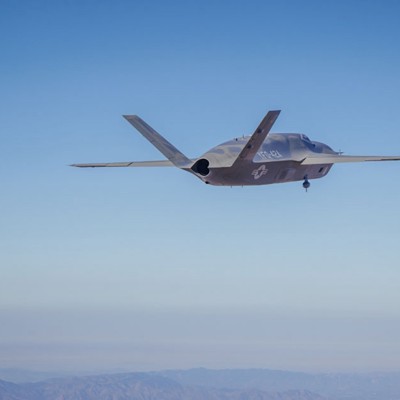
This is primarily a Power Projection story with secondary Market Forces implications. On capability: the Marines are adopting an existing platform to accelerate autonomous teaming, reducing the gap between current and near-term force design.
On market: General Atomics gains a near-term production contract and institutional position as the CCA development partner, but the real revenue depends on CCA production quantity and timeline—both still undefined. Limited geopolitical friction angle unless this signals a shift in autonomous weapons doctrine or export posture, which the article does not address.
This consolidation reduces fragmentation in autonomous wingman development but creates technical and programmatic risk if the Air Force-optimized platform proves misaligned with Marine operational needs (distributed operations, smaller forward bases, expeditionary logistics).
General Atomics secures a production bridge contract while CCA development timelines remain uncertain—the real test is whether the SkyGuardian baseline accelerates fielding or becomes a costly detour. Watch whether this signals broader DoD acceptance that CCA will be Air Force-led, or if the Marines maintain separate requirements that force a second platform later.
The article does not specify: (1) contract value or duration, (2) which MQ-9B variant or modifications are required for Marine CCA work, (3) how Marine operational constraints (carrier operations, expeditionary basing) will be addressed if they diverge from Air Force needs, or (4) timeline for trans...
Fault Lines
Strategic intelligence, synthesized daily — with a public track record. Every call graded against what actually happened.