Turkey Commissions Armed USV, Expands Autonomous Naval Capability
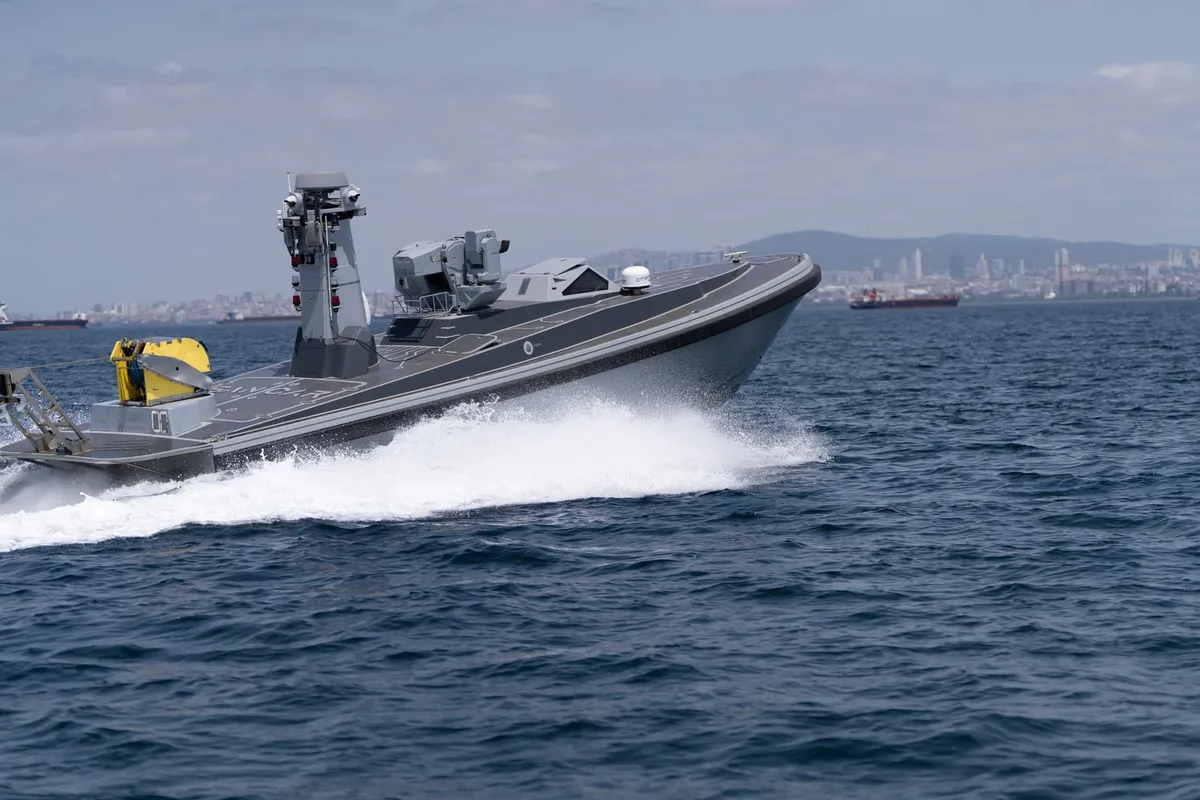
Turkey's operational SANCAR deployment forces NATO allies to revise Eastern Mediterranean contingency plans if autonomous platforms can conduct sustained patrol or denial operations at lower cost than manned corvettes.
If Havelsan achieves serial production and cost parity with crewed alternatives, Turkish naval procurement budgets will shift toward unmanned platforms, freeing capital for anti-ship missiles and air defense — a reallocation that changes the effective combat power of Turkish Navy task groups without a proportional increase in defense spending.
Turkey now operates an armed autonomous naval platform in the Eastern Mediterranean and Black Sea, reducing dependence on manned vessels for constabulary and lower-intensity operations.
This expands Turkish force projection without proportional crew or sustainment costs, and signals confidence in autonomous combat systems — a capability gap that NATO allies (particularly Greece and Cyprus) will monitor closely given existing maritime friction over EEZ claims. The real constraint is production scale: one commissioned unit does not establish a fleet.
Watch whether Havelsan receives domestic funding for serial production or export orders, which would indicate whether SANCAR becomes a cost-driver advantage in regional naval competition.
The article does not specify SANCAR's armament type, operational radius, autonomous vs. tele-operated control architecture, unit cost, or planned production rate — all critical to assessing whether this is a symbolic milestone or the start of a capability buildup.
Fault Lines
Strategic intelligence, synthesized daily — with a public track record. Every call graded against what actually happened.