US Navy Reestablishes Submarine Squadron 3 at HMAS Stirling; Signals Permanent Indo-Pacific Presence Expansion
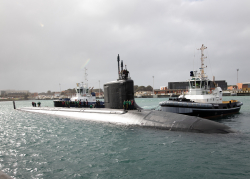
Stirling as a dedicated logistics node for U.S. and UK boats reshapes the operational math for Taiwan contingency planning. If a carrier strike group deploys with two fast-attack boats, they no longer need to plan 60-day turnarounds to Guam; Stirling allows 30-day maintenance cycles without leaving the theater.
This compresses the timeline for follow-on deployments and raises the cost of any Chinese blockade attempt — Beijing would need to neutralize an allied base in Australian territory, not just contest the Strait. The formalization also creates a tripwire: any attack on Stirling triggers ANZUS Article 5, making the Australia-U.S. alliance explicitly operational in any Taiwan crisis.
This locks in a permanent U.S. submarine logistics footprint 4,000 nautical miles from the Taiwan Strait — eliminating the need to cycle support crews through the continental U.S. or Japan, which cuts deployment reaction time by 4-6 weeks for any Taiwan contingency or South China Sea operation.
INDOPACOM no longer needs to choose between keeping fast-attack boats forward or rotating them home for maintenance; Stirling becomes the hub. The formalization also signals to Beijing that Washington is betting on sustained Indo-Pacific naval presence, not rotating surges.
Watch the FY27 FYDP for explicit funding lines for Stirling expansion — if the Navy requests $200M+ for berthing upgrades and fuel storage, that confirms the commitment is structural, not temporary.
Does the article specify whether Submarine Squadron 3 will command only rotational deployments, or will some boats be permanently forward-stationed at Stirling? The distinction determines whether this is a logistics hub (rotational support) or a forward base (permanent presence).
Fault Lines
Strategic intelligence, synthesized daily — with a public track record. Every call graded against what actually happened.