Northrop-Hanwha Solid Rocket Booster MOA Advances AReS Extended-Range Strike Capability
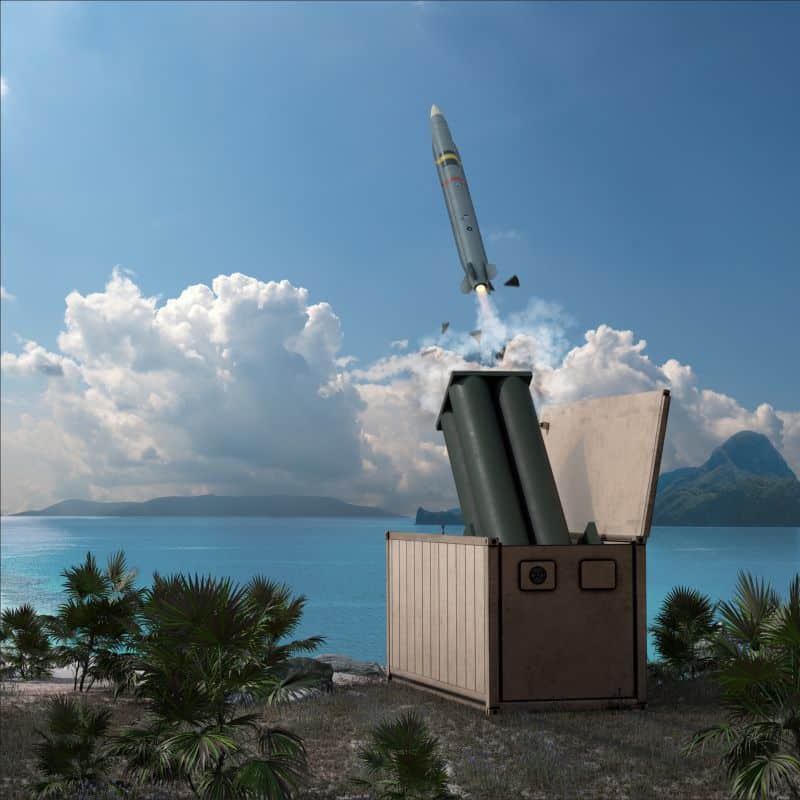
AReS procurement directly competes for solid motor production capacity against the FY27 defense budget spike (42% increase). If Northrop accelerates AReS LRIP to capitalize on that funding surge, it pulls Hanwha's booster production forward and potentially delays other extended-range programs (Tomahawk Block V, JASSM-ER variants) that rely on the same supplier base.
South Korean co-production also creates a lever for allied interoperability in the Indo-Pacific — Japan and Australia can argue for AReS integration into their own extended-range strike architectures, converting a US capability into a coalition asset in the Taiwan contingency planning space.
This is a capability acceleration play, not a breakthrough.
Northrop is locking in South Korean propulsion expertise to field AReS faster and hedge against domestic solid motor bottlenecks — a real constraint as defense spending spikes 42% in FY27 and multiple hypersonic and extended-range programs compete for limited supplier capacity. The Hanwha partnership also signals Northrop's confidence that AReS will clear the LRIP gate; MOAs don't precede programs in contention.
What matters operationally: AReS enters the Navy's stand-off strike portfolio at a moment when Hormuz interdiction and potential Taiwan contingency planning both demand extended-range precision strike from ships and land bases. The timing is not coincidental.
Hanwha's involvement adds a South Korean industrial footprint to a US-led contested-environment weapon, which may smooth allied procurement pathways in Japan and Australia — both facing concurrent Chinese military pressure and both watching US supply reliability after the FY27 budget volatility.
Does this MOA include a production commitment, or is it purely R&D? A pure R&D agreement signals Northrop is still de-risking the concept; a production MOA suggests AReS is already in the procurement pipeline for FY27 or FY28 LRIP. The source doesn't clarify.
Fault Lines
Strategic intelligence, synthesized daily — with a public track record. Every call graded against what actually happened.