UK Plans Six Common Combat Vessels to Replace Type 45 Destroyers; Drone-Command Architecture Signals Crewed-Unmanned Teaming Shift
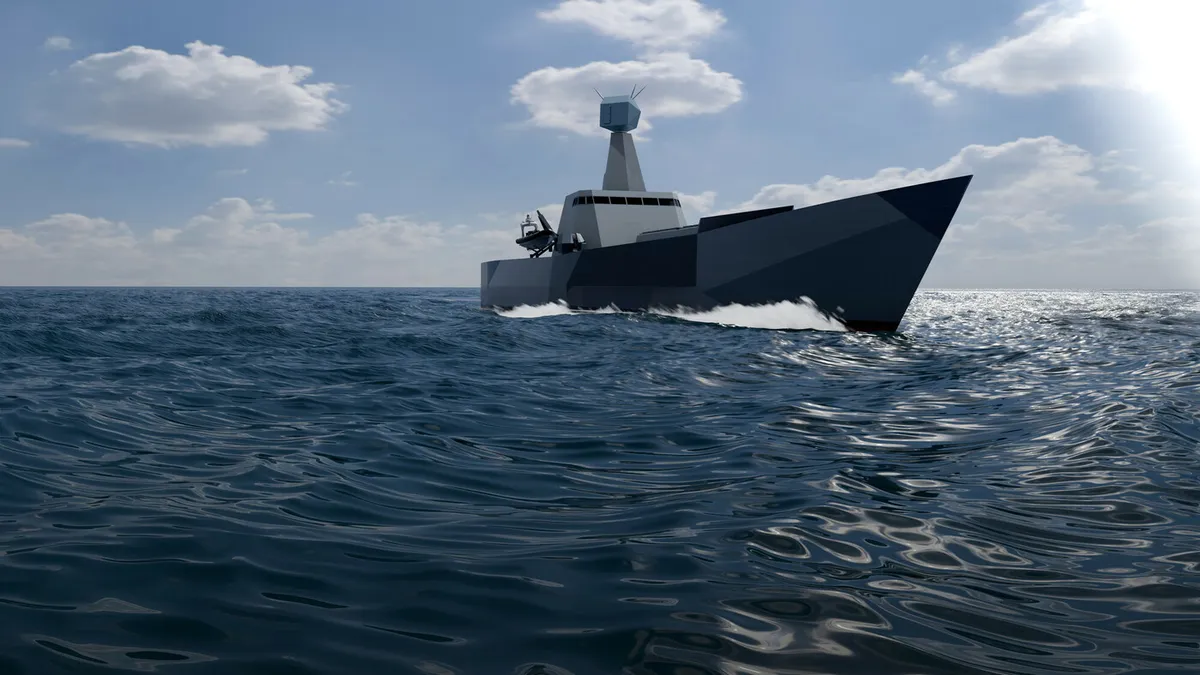
The CCV design reflects NATO's broader pivot toward distributed naval operations and magazine depth via unmanned systems—visible across AUKUS shipbuilding and the Eurodrone ASW variant signed by Airbus and Kawasaki just yesterday.
However, the UK is betting on a single crewed platform to orchestrate that network, whereas the US and France are experimenting with smaller, more distributed command nodes (LCS, Belh-class). If the CCV's sensor and processing suite becomes the bottleneck—or if peer adversaries (Russia, China) target it preferentially—the entire unmanned swarm becomes tactically isolated.
The Royal Navy is committing hull slots and procurement budget to a crewed platform whose primary mission is managing unmanned subordinates—not firing its own weapons.
This inverts the traditional destroyer role and exposes a hard constraint: the Navy must now field integrated C4ISR and autonomous control systems before the first CCV enters service, or it will have expensive command ships with no viable tactical doctrine.
BAE Systems and Babcock International, the likely lead contractors, face a 5-7 year development cycle to deliver a combat-proven human-machine teaming architecture—one that does not yet exist in operational Royal Navy service.
Watch the Type 31 frigate's autonomous trials (expected 2027-2028) for proof of concept; if the Navy cannot demonstrate reliable unmanned coordination on a smaller platform, the CCV program will slip or be restructured.
What is the actual budget allocation for the CCV program across the SDSR period? The article does not specify total program cost, unit cost, or procurement timeline—all essential to assess whether this is a genuine capability bet or a placeholder for future decisions.
Fault Lines
Strategic intelligence, synthesized daily — with a public track record. Every call graded against what actually happened.