Sweden Converts SIGINT Vessel to Seabed Warfare Testbed Amid Baltic Sabotage Threat
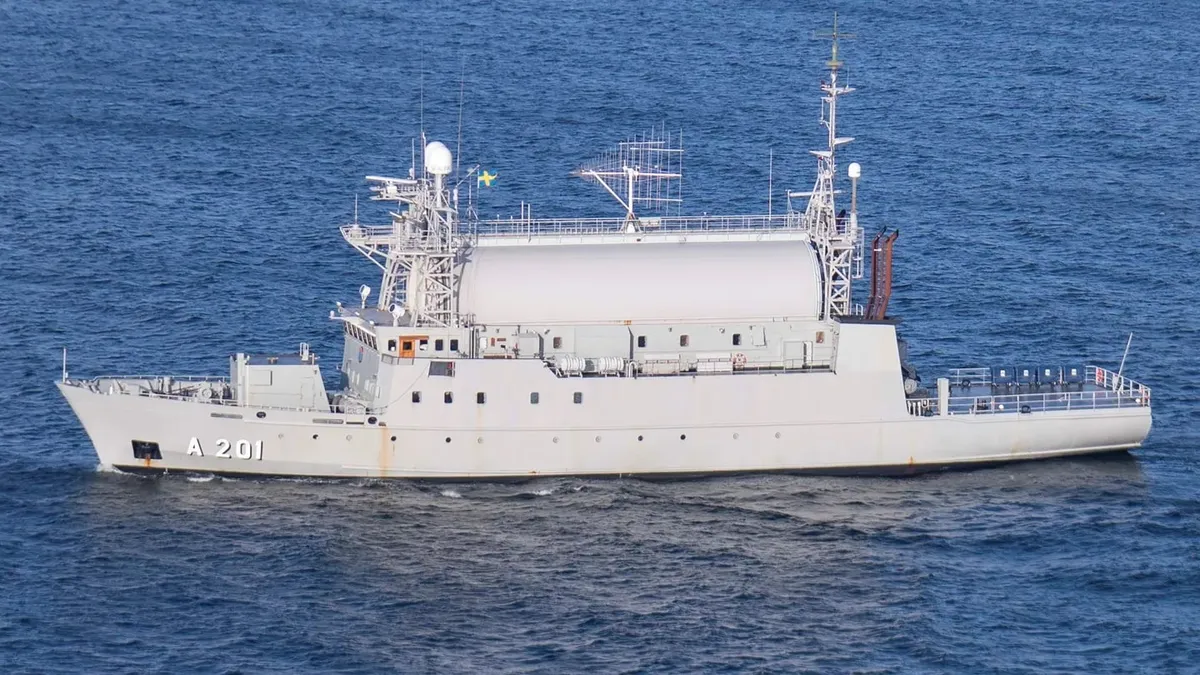
Sweden's seabed warfare testbed creates demand for specialized subsea sensors, autonomous underwater vehicles, and mine-countermeasure systems—sectors where U.S. and European primes (Huntington Ingalls, L3Harris, ThyssenKrupp Marine Systems) currently hold limited capacity.
If the testbed generates operational requirements, it will feed into NATO's undersea capability gaps, which are already being exposed by the ongoing Hormuz mine-clearance operations (per April 13 signal) and the U.S. Navy's stretched inventory.
This reflects NATO's acceleration of subsea defense priorities in response to documented cable-cutting campaigns and suspected state-level underwater sabotage.
Sweden's pivot from SIGINT collection to active seabed warfare R&D signals a shift from passive monitoring to offensive/defensive underwater capability development—a gap that has widened since the 2022 Nord Stream pipeline explosions. The move indicates Stockholm now treats submarine infrastructure protection as a frontline NATO concern, not a civilian utility issue.
However, the article does not specify what operational capabilities the testbed will develop or test, leaving the actual threat model and capability roadmap unclear.
The article does not disclose what specific seabed warfare technologies or tactics Sweden intends to test, what timeline is projected for operationalization, or whether this testbed is integrated into NATO's broader underwater defense architecture.
Fault Lines
Strategic intelligence, synthesized daily — with a public track record. Every call graded against what actually happened.