BAE-Norway LSC Program Advances 50-Knot Littoral Craft for Contested Amphibious Ops
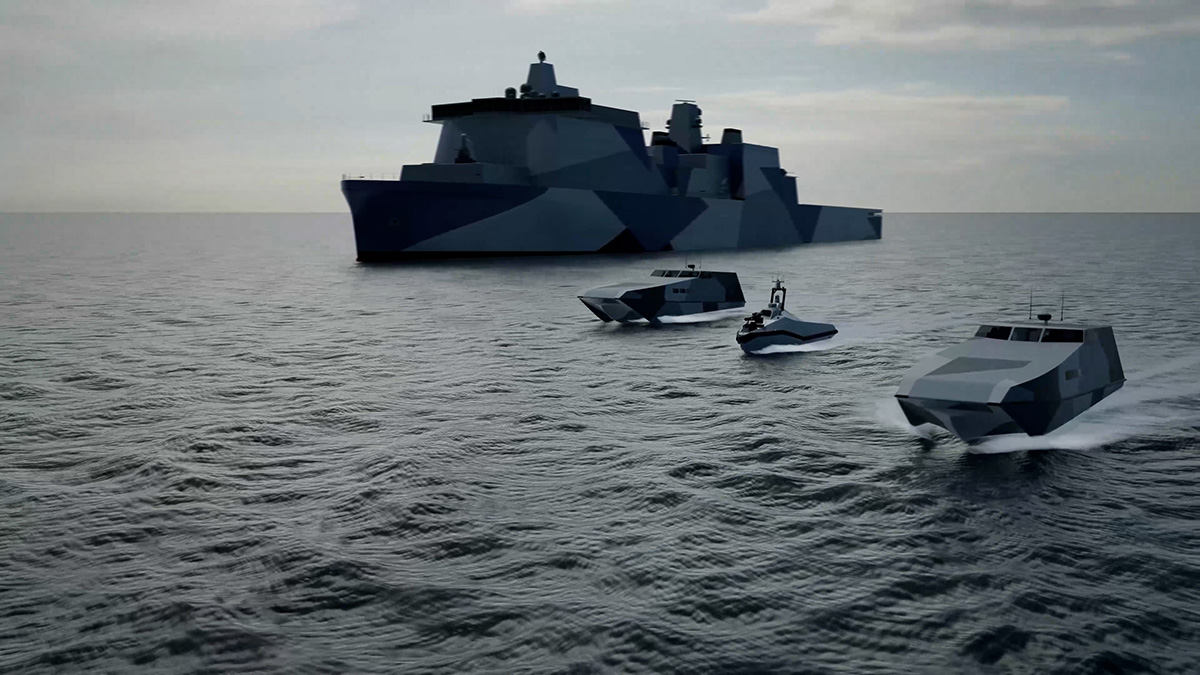
Fast assault craft reduce amphibious force exposure time in the Baltic and North Sea, lowering the cost of forward-deployed NATO presence without requiring additional carrier or escort tonnage — this shifts amphibious strategy away from large-deck dependency toward distributed, high-speed insertion.
Conversely, if production ramps to meet multiple NATO customers, it will compete for UK and Norwegian shipyard capacity against surface combatant and submarine programs already under strain.
This signals BAE and Norwegian industry are advancing a capability gap in fast, shallow-draft assault craft for NATO's northern flank and expeditionary amphibious operations.
If the LSC achieves its performance envelope and enters service with UK and Norwegian forces by 2029-2030, it extends amphibious reach into denied environments where conventional landing craft would face higher attrition — relevant for contingencies in the Baltic and Arctic.
However, the article contains no evidence of formal procurement orders, integration timelines, or allied adoption beyond the UK-Norway partnership, so impact on shipbuilding capacity allocation and defense budgets remains unquantified.
The article does not disclose development cost, production schedule, unit price, planned procurement quantity, integration status with existing amphibious commands, or whether other NATO allies (e.g., Denmark, Poland, Netherlands) have expressed interest or funding commitments.
Fault Lines
Strategic intelligence, synthesized daily — with a public track record. Every call graded against what actually happened.