Navy Targets First FF(X) Frigate Launch in Late 2028; FY27 Budget Locks Timeline
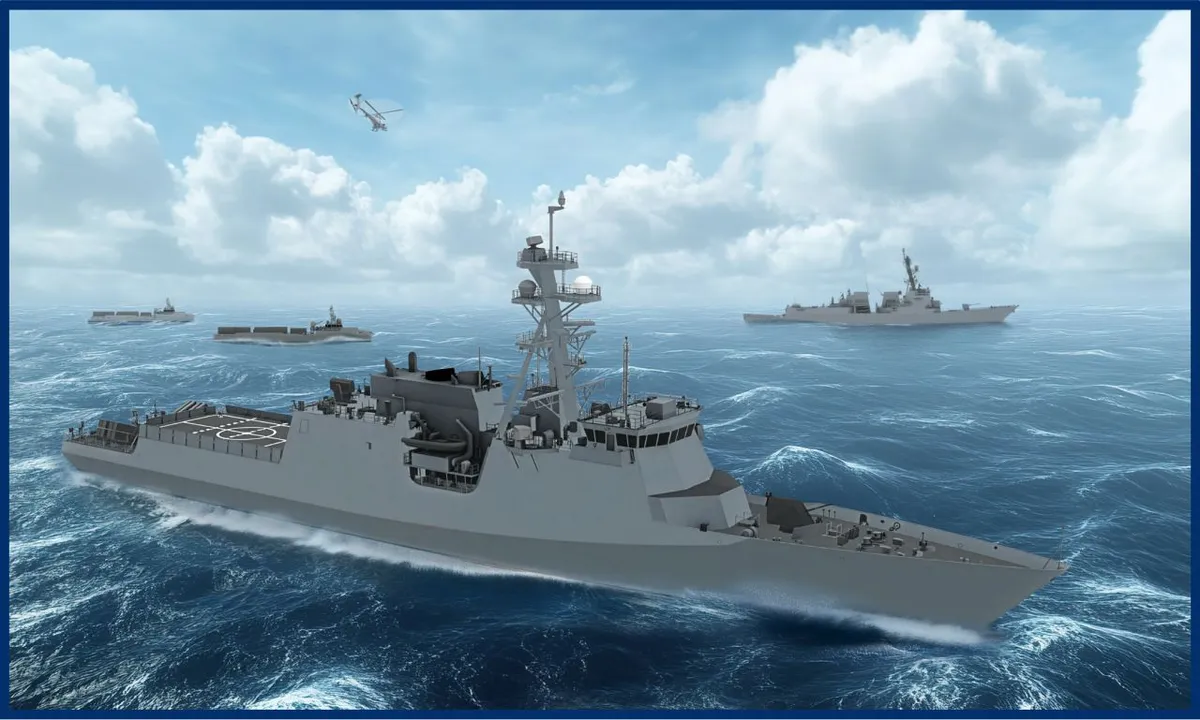
A 2028 first-ship delivery commits industrial capacity at General Dynamics and Huntington Ingalls during a period when both yards are already at or near capacity on DDG-51 and LCS production. If FF(X) ramps as planned, it either compresses LCS LRIP quantities (weakening the Navy's distributed surface fleet) or delays DDG-51 Block III deliveries (pushing back the large-deck escort transition).
The timeline also locks Navy force structure planning to a specific industrial output — any yard delay cascades directly into fleet composition decisions.
This is a procurement timeline statement, not a program decision.
The Navy is publicly committing to a delivery date in a budget document — which means the timeline is now a measurable metric against which Congress and the Pentagon will track execution. If the Navy misses late 2028, it signals either design immaturity, industrial capacity constraints, or funding shortfalls. Watch whether this timeline survives the FY27 budget markup on the Hill.
The FF(X) is meant to address distributed surface warfare doctrine, but a slip here doesn't kill the program — it just delays the force structure transition. The real risk is if the first ship's cost overruns, forcing a Lot 1 stretch that compresses LRIP quantities and unit costs downstream.
Does the Navy's timeline assume a single design winner selected, or are they still running a competitive evaluation? The article doesn't specify whether FF(X) is down-select or still in trade study phase — that distinction determines whether 2028 is achievable or aspirational.
Fault Lines
Strategic intelligence, synthesized daily — with a public track record. Every call graded against what actually happened.