Royal Navy Deploys HMS Dragon to Hormuz as Multinational Escort Coalition Takes Shape
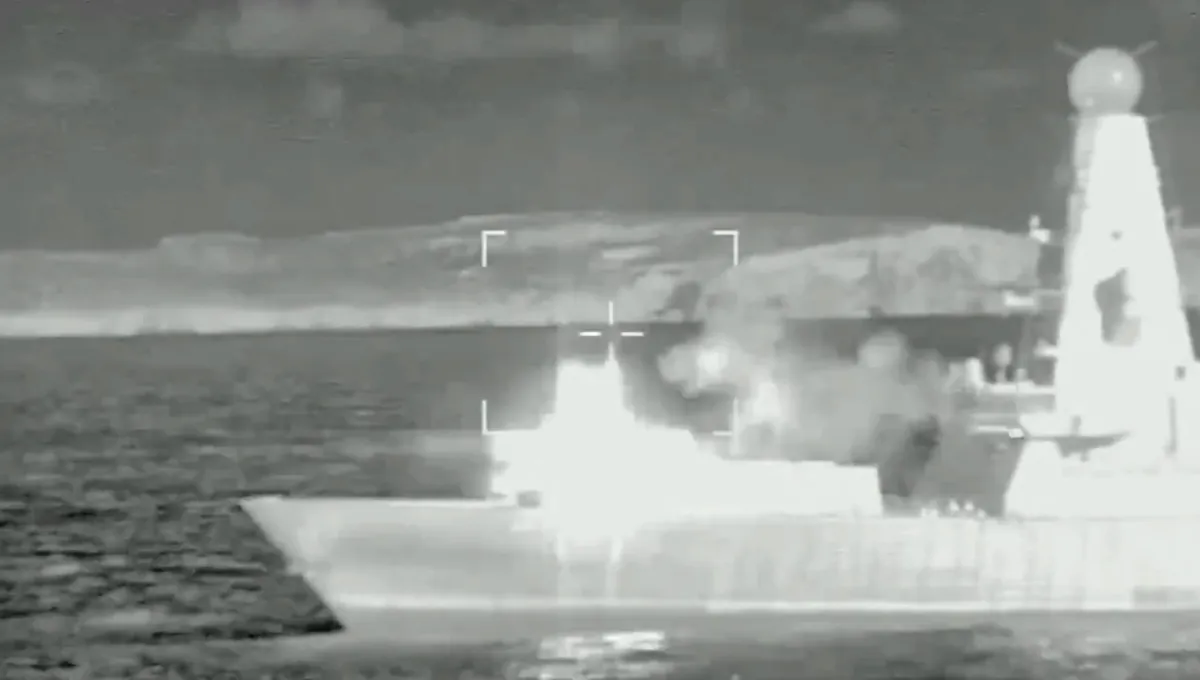
The deployment of a single Type 45 to a 1,500-ship problem exposes a hard constraint: Britain has only six Type 45 destroyers in the active fleet, and HMS Dragon's absence from the Channel and Eastern Atlantic weakens NATO's air-defense posture in the North Sea.
If the Hormuz blockade persists beyond Q3 2026, the Royal Navy will face pressure to rotate a second destroyer forward — forcing a choice between maintaining NATO commitments and sustaining the Gulf coalition.
This also signals that London has effectively accepted that Saudi Arabia's airspace denial (which halted Project Freedom) applies equally to allied escorts, meaning any corridor protection must operate from the Gulf itself rather than from Saudi bases.
Britain is committing a capital ship to a constrained operating area where Iran has already demonstrated willingness to strike U.S.
Navy vessels — forcing the Royal Navy to absorb air-defense burden for a coalition whose rules of engagement remain undefined.
HMS Dragon's deployment signals that London views the Hormuz corridor as non-negotiable infrastructure, but the ship's single-platform air-defense architecture (48 Aster missiles, no organic air wing) means it cannot independently defend a 1,500-vessel queue against sustained Iranian missile salvos.
The UK Ministry of Defence has not stated whether HMS Dragon operates under U.S. rules of engagement or maintains independent targeting authority — a critical gap if the U.S. and UK disagree on proportional response. Watch for the formal coalition command structure announcement, which will reveal whether the UK accepted subordination to CENTCOM or negotiated a separate chain of command.
What are the rules of engagement for HMS Dragon if Iranian forces attack non-U.S. shipping in the corridor? Does the UK retain independent targeting authority, or does it defer to CENTCOM?
Fault Lines
Strategic intelligence, synthesized daily — with a public track record. Every call graded against what actually happened.