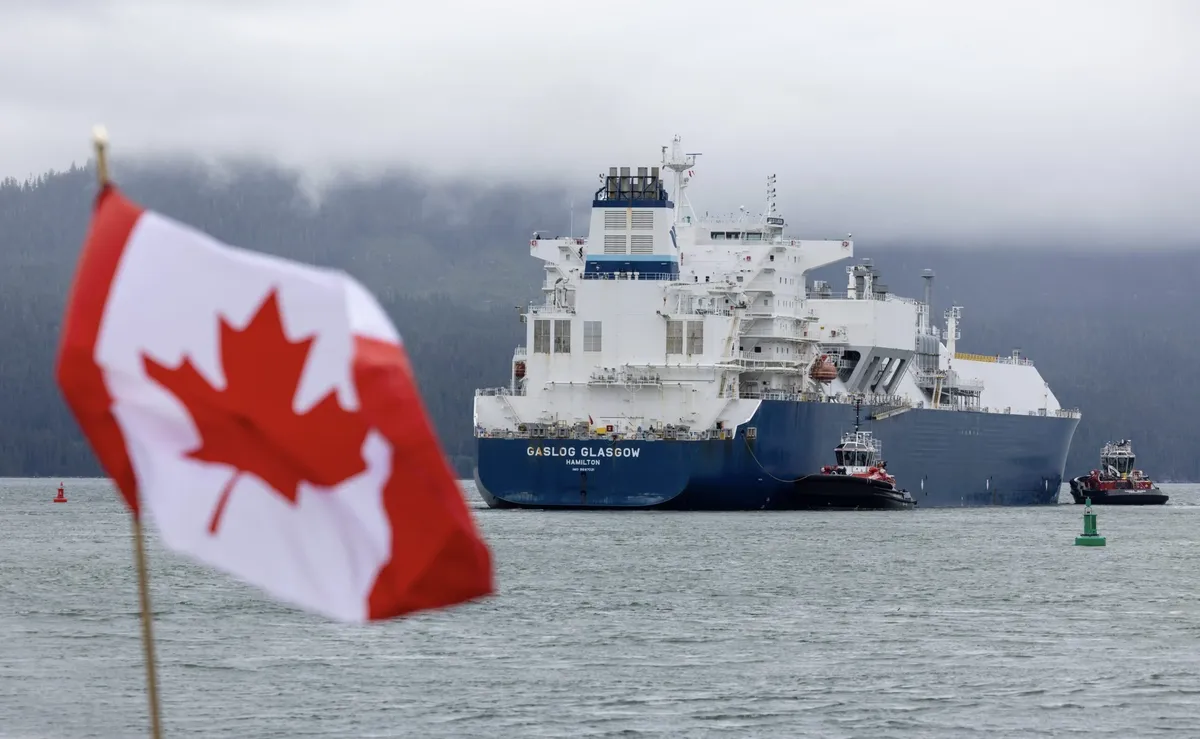
Canada-Germany LNG Deal Locks $7.3B BC Export Project Into Allied Energy Security Chain
If this deal closes with a 10-15 year contract, it severs Germany's remaining leverage point for Moscow—the threat of renewed Russian gas imports if Ukraine negotiations stall. That removes a key variable from Kremlin calculations about European resolve.
Conversely, if the contract is short-term or contingent on price, Germany remains exposed to spot-market volatility, which has historically forced Berlin to moderate NATO commitments during energy crises. The second-order effect: Polish and Baltic defense ministries have been lobbying Germany to lock in LNG supply precisely to eliminate this excuse.
Germany's energy security has been the binding constraint on European defense spending and NATO cohesion since Russia cut gas flows in 2022.
This deal—if executed—gives Berlin a non-Russian LNG source with 18-24 month lead time to first cargo, which directly enables sustained defense budget increases without energy-price volatility forcing trade-offs between military procurement and domestic energy costs.
The mechanism: Canada's West Coast LNG capacity (estimated 15-20 million tonnes per annum across all projects) frees European capital otherwise locked into emergency LNG spot purchases and renewable buildout, redirecting it into the €500B+ defense spending commitments pledged at NATO summits.
Watch the Canadian regulatory approval timeline—the National Energy Board's review determines whether first cargo reaches Germany by 2028 or slips to 2029-2030, which directly impacts whether Germany's FY27-FY29 defense budgets stay on track or face renewed energy-cost pressure.
Does the deal include a long-term take-or-pay contract, or is it a spot-market arrangement? The difference determines whether Germany can model stable energy costs into defense budgeting. Also: which Canadian project is the source—Kitimat, Prince Rupert, or a new facility?
Fault Lines
Strategic intelligence, synthesized daily — with a public track record. Every call graded against what actually happened.