Airbus Unveils Ravenstorm Combat Drone for Crewed Fighter Teaming
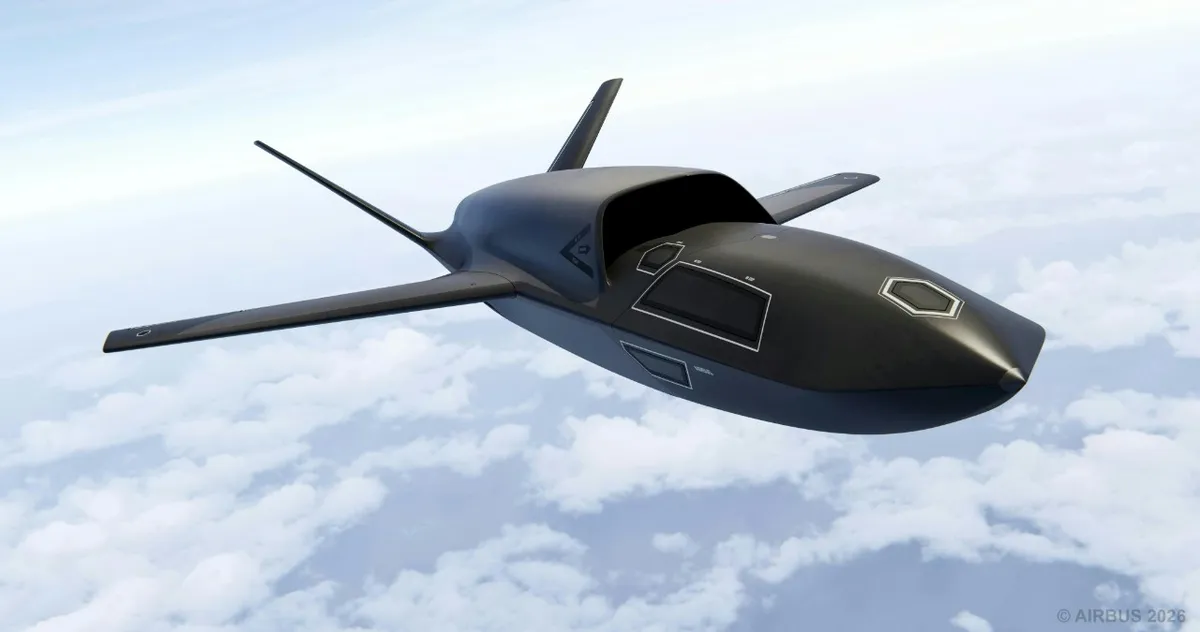
Ravenstorm fills a gap in European air combat architecture that NATO has largely left to US platforms. If Airbus can deliver an autonomous wingman at lower cost than a manned fighter, it competes directly with Lockheed's F-35 sustainment ecosystem—not on the fighter itself, but on the total force structure.
A European air force could field more Tempest or Gripen airframes by replacing some crewed escorts with Ravenstorm drones, stretching procurement budgets. The risk: if Ravenstorm doesn't integrate cleanly with Allied command-and-control systems, it becomes an orphan capability.
Integration into NATO air operations requires NATO-certified datalinks and fire-control protocols—a 2-3 year certification cycle that could delay operational deployment beyond Airbus's current timeline.
Ravenstorm signals Airbus's pivot toward autonomous teaming systems at a moment when US and allied air forces are consolidating procurement around F-35-centric architectures.
Airbus lacks integration pathways into USAF or Navy fighter fleets—Ravenstorm's value depends on European adoption, UK Tempest integration, or export sales to non-Five Eyes allies. The timeline matters: if Ravenstorm reaches operational maturity before Tempest (2035 entry per recent GCAP timeline), Airbus gains a standalone product line. If it lags, it becomes a niche complement.
Watch whether the UK formally commits Ravenstorm to Tempest teaming in the next GCAP contract milestone.
What is Ravenstorm's endurance, payload capacity, and sensor suite compared to the US Navy's Collaborative Combat Aircraft (CCA) concept? Does Airbus plan US market entry, or is this purely a European/export product?
Fault Lines
Strategic intelligence, synthesized daily — with a public track record. Every call graded against what actually happened.