South Korea's KSS-III Submarine Completes First Trans-Pacific Deployment to Canada
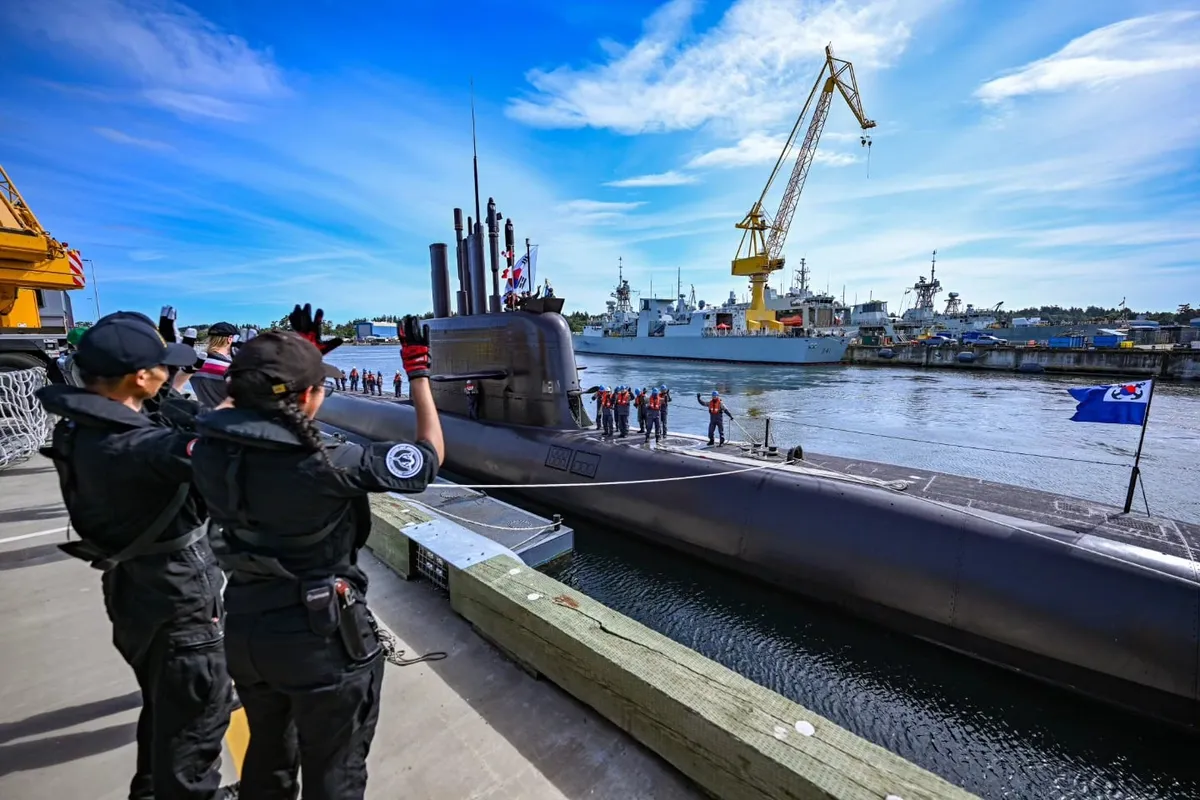
If South Korea establishes a routine trans-Pacific rotation, it creates a new logistics tail: forward basing negotiations, maintenance contracts, and crew rotation cycles that bind Seoul deeper into North American defense infrastructure.
This also means the KSS-III class becomes a known quantity to US and Canadian naval intelligence—forcing China to treat South Korean submarines as a peer threat rather than a regional nuisance. The longer-term play: if Seoul can sustain this, it breaks the narrative that only the US and its closest allies (UK, Australia) can operate at scale outside their home waters.
South Korea has demonstrated a submarine capability—range, endurance, and operational autonomy—that positions it as a credible independent actor in the Indo-Pacific beyond the Korean Peninsula.
This deployment signals to Beijing and Moscow that Seoul can project power into allied waters without reliance on US logistics or escort, and to Washington and Ottawa that South Korean naval assets are interoperable and welcome in North American basing.
The timeline matters: this occurs as China accelerates its own submarine modernization and as the US faces Pacific Fleet strain from competing commitments in the Taiwan Strait and South China Sea. Watch whether this becomes a recurring deployment pattern (annual or biennial rotations) or a one-off demonstration—the difference tells you whether Seoul is signaling capability or commitment.
Did the deployment include any joint exercises or interoperability drills with Canadian or US forces while the boat was in Esquimalt, or was this a port visit only? The operational value hinges on whether this is the start of integrated operations or a symbolic gesture.
Fault Lines
Strategic intelligence, synthesized daily — with a public track record. Every call graded against what actually happened.